


As a seasoned supplier of auto copper parts, I've witnessed firsthand the pivotal role these components play in the automotive industry. One of the most critical aspects that often comes under scrutiny is the heat - resistance of auto copper parts. In this blog, I'll delve into the details of what heat - resistance means for these parts, the factors that influence it, and why it matters so much in the automotive world.
Understanding Heat - Resistance in Auto Copper Parts
Heat - resistance refers to the ability of a material to withstand high temperatures without undergoing significant changes in its physical or chemical properties. For auto copper parts, this is of utmost importance because engines generate a substantial amount of heat during operation. If the copper parts cannot handle this heat, they may deform, corrode, or lose their mechanical strength, which can lead to engine failure and safety hazards.
Copper has some inherent properties that make it a good candidate for heat - resistant applications. It has high thermal conductivity, which means it can transfer heat away from critical areas quickly. This helps in preventing the build - up of excessive heat in the engine. For example, Cooper Bushing is a common auto copper part that benefits from this property. It can dissipate heat efficiently, reducing the risk of overheating and wear.
Factors Affecting the Heat - Resistance of Auto Copper Parts
Alloy Composition
Pure copper has a decent heat - resistance, but when it is alloyed with other elements, its heat - resistance can be significantly enhanced. For instance, adding elements like tin, zinc, or nickel can form copper alloys with improved mechanical properties and better resistance to high temperatures. These alloying elements can form a protective layer on the surface of the copper part, preventing oxidation and corrosion at elevated temperatures.
Manufacturing Process
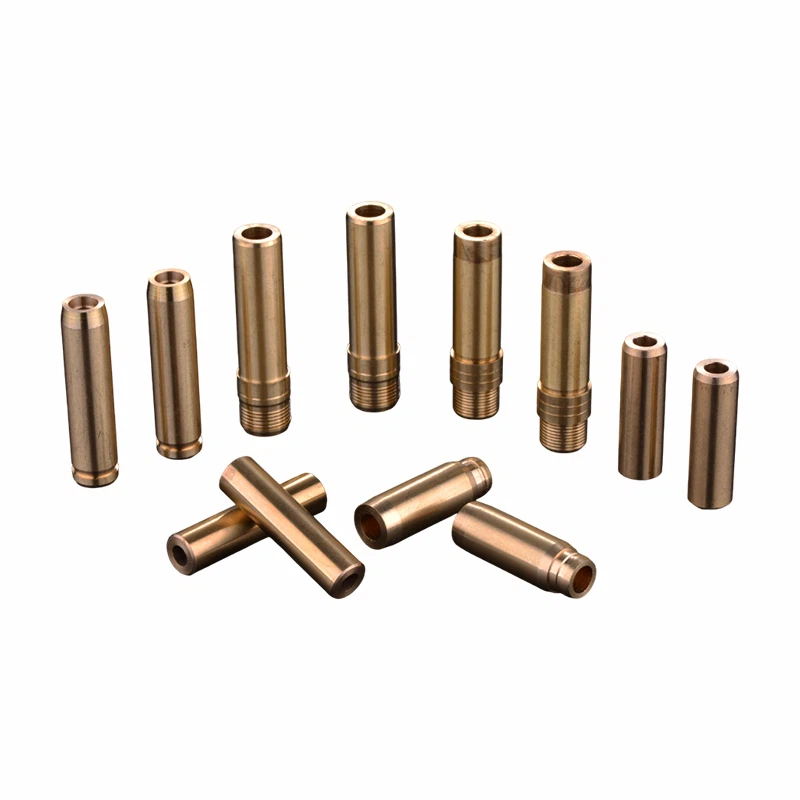
The way auto copper parts are manufactured also plays a crucial role in their heat - resistance. Processes such as precision casting, forging, and heat - treatment can optimize the internal structure of the parts, making them more resistant to heat. For example, heat - treatment can relieve internal stresses in the copper part and refine its grain structure, enhancing its strength and heat - resistance. Valve Guide Pipe, as shown in Valve Guide Pipe, often undergoes specific manufacturing processes to ensure it can withstand the high - temperature environment in the engine.
Surface Finish
A proper surface finish can improve the heat - resistance of auto copper parts. A smooth surface finish reduces the contact area between the part and the surrounding environment, minimizing heat transfer by conduction. Additionally, special coatings can be applied to the surface of the copper parts to provide an extra layer of protection against heat, oxidation, and corrosion.
Importance of Heat - Resistance in Different Auto Copper Parts
Pistons and Bearings
Pistons and bearings are among the most heat - sensitive parts in an engine. They are constantly exposed to high - temperature combustion gases and friction. Auto copper parts like Floating Bearing need to have excellent heat - resistance to maintain their shape and functionality. If these parts overheat, they can expand, leading to increased friction, reduced efficiency, and potential engine damage.
Cooling Systems
Copper parts are also widely used in automotive cooling systems. Radiators, for example, often contain copper tubes and fins. The high thermal conductivity of copper allows for efficient heat transfer from the engine coolant to the surrounding air. Good heat - resistance ensures that these parts can operate effectively over a long period, even under extreme temperature conditions.
Testing the Heat - Resistance of Auto Copper Parts
To ensure the quality and reliability of auto copper parts, rigorous testing is carried out. One common test is the high - temperature endurance test. In this test, the copper parts are exposed to a specific high temperature for a set period. The parts are then examined for any signs of deformation, oxidation, or loss of mechanical properties.

Another important test is the thermal cycling test. This test simulates the real - world operating conditions of the engine, where the temperature fluctuates frequently. The copper parts are subjected to repeated cycles of heating and cooling, and their performance is monitored. These tests help in identifying any potential weaknesses in the heat - resistance of the parts and allow for improvements in the manufacturing process.
Meeting the Industry Standards
The automotive industry has strict standards for the heat - resistance of auto copper parts. These standards are in place to ensure the safety and performance of vehicles. As a supplier, we are committed to meeting and exceeding these standards. Our quality control team conducts regular inspections and tests on all our auto copper parts to ensure they meet the required heat - resistance specifications.
Conclusion and Call to Action
In conclusion, the heat - resistance of auto copper parts is a critical factor that directly impacts the performance, reliability, and safety of vehicles. Our company, as a leading supplier of auto copper parts, is dedicated to providing high - quality products with excellent heat - resistance. We use advanced manufacturing processes, high - quality alloy compositions, and strict quality control measures to ensure our parts can withstand the most demanding automotive applications.
If you are in the market for reliable auto copper parts with superior heat - resistance, we invite you to contact us for a purchase negotiation. Our team of experts is ready to assist you in finding the right parts for your specific needs. Whether you need Cooper Bushings, Valve Guide Pipes, or Floating Bearings, we have the expertise and the products to meet your requirements.
References
- "Automotive Materials Handbook"
- "Thermal Properties of Metals and Alloys"
- Industry reports on automotive component standards


