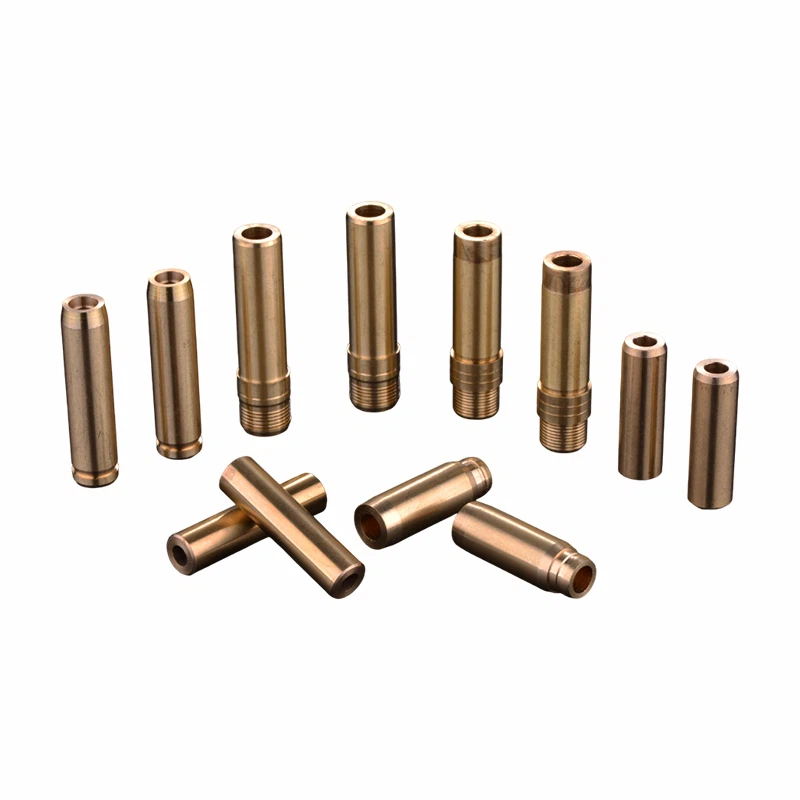
Acoustic emission (AE) detection of steel piston shoes is a crucial aspect in ensuring their quality, performance, and reliability. As a Steel Piston Shoe Steel Piston Shoe supplier, understanding how to effectively detect the acoustic emission of these components is of utmost importance. In this blog, we will delve into the methods, significance, and practical considerations of detecting the acoustic emission of steel piston shoes.
Significance of Acoustic Emission Detection
Acoustic emission refers to the generation of transient elastic waves in a material due to the rapid release of energy. In the context of steel piston shoes, acoustic emission can be caused by various factors such as crack propagation, friction, wear, and internal stress release. By detecting and analyzing the acoustic emission signals, we can gain valuable insights into the health and integrity of the piston shoes.
One of the primary reasons for detecting acoustic emission is to identify potential defects or damage in the early stages. Cracks or other forms of damage in steel piston shoes can lead to reduced performance, increased wear, and even catastrophic failure. By detecting the acoustic emission associated with these defects, we can take proactive measures to prevent further damage and ensure the safe and reliable operation of the equipment.
Another important aspect of acoustic emission detection is quality control during the manufacturing process. By monitoring the acoustic emission signals during the production of steel piston shoes, we can identify any anomalies or deviations from the normal behavior. This allows us to take corrective actions in a timely manner, ensuring that only high-quality piston shoes are delivered to our customers.
Methods of Acoustic Emission Detection
There are several methods available for detecting the acoustic emission of steel piston shoes. The choice of method depends on various factors such as the nature of the application, the type of defects to be detected, and the available resources. Some of the commonly used methods are discussed below.
Piezoelectric Sensors
Piezoelectric sensors are one of the most widely used devices for acoustic emission detection. These sensors work on the principle of the piezoelectric effect, which is the generation of an electric charge in response to mechanical stress. When an acoustic emission wave reaches the piezoelectric sensor, it causes a deformation in the sensor material, which in turn generates an electric signal. This signal can be amplified and processed to extract information about the acoustic emission event.
Piezoelectric sensors offer several advantages for acoustic emission detection. They are highly sensitive, capable of detecting even very weak acoustic emission signals. They also have a wide frequency response range, allowing them to detect a broad spectrum of acoustic emission frequencies. Additionally, piezoelectric sensors are relatively small and lightweight, making them easy to install and integrate into existing systems.
Laser Doppler Vibrometers
Laser Doppler vibrometers (LDVs) are another type of sensor that can be used for acoustic emission detection. These sensors work by measuring the velocity of a vibrating surface using the Doppler effect. When a laser beam is directed at a vibrating surface, the frequency of the reflected light changes due to the motion of the surface. By analyzing this frequency change, the velocity of the surface vibration can be determined.
LDVs offer several advantages for acoustic emission detection. They are non-contact sensors, which means that they do not require physical contact with the surface being measured. This makes them suitable for applications where contact sensors may not be feasible or desirable. LDVs also have a high spatial resolution, allowing them to measure the vibration of small areas on the surface. Additionally, LDVs can provide accurate and real-time measurements of the vibration velocity, which is useful for detecting and analyzing acoustic emission events.
Acoustic Emission Analysis Software
In addition to sensors, acoustic emission analysis software is also an essential component of the acoustic emission detection system. This software is used to process and analyze the acoustic emission signals collected by the sensors. It can perform various functions such as signal filtering, feature extraction, and classification.
Acoustic emission analysis software can provide valuable information about the acoustic emission events, such as the location, amplitude, frequency, and duration of the events. This information can be used to identify potential defects or damage in the steel piston shoes. The software can also generate reports and visualizations to help users interpret the results and make informed decisions.
Practical Considerations
When detecting the acoustic emission of steel piston shoes, there are several practical considerations that need to be taken into account. These considerations can affect the accuracy and reliability of the detection results.
Sensor Placement
The placement of the sensors is a critical factor in acoustic emission detection. The sensors should be placed in a location where they can effectively detect the acoustic emission signals generated by the piston shoes. This may require careful consideration of the geometry and structure of the piston shoes, as well as the source of the acoustic emission.
In general, the sensors should be placed as close as possible to the area of interest. This can help to maximize the signal strength and minimize the interference from other sources. However, the sensors should also be placed in a location where they are not likely to be damaged or affected by the operating conditions.
Environmental Conditions
The environmental conditions can also have a significant impact on the acoustic emission detection results. Factors such as temperature, humidity, and vibration can affect the performance of the sensors and the accuracy of the measurements. Therefore, it is important to take these factors into account when designing and implementing the acoustic emission detection system.
For example, high temperatures can cause the piezoelectric sensors to lose their sensitivity, while high humidity can lead to corrosion and damage to the sensors. Vibration from other sources can also introduce noise into the acoustic emission signals, making it difficult to distinguish the signals from the background noise. To minimize the effects of these environmental factors, appropriate measures such as temperature compensation, humidity control, and vibration isolation should be taken.
Calibration and Validation
Calibration and validation are essential steps in ensuring the accuracy and reliability of the acoustic emission detection system. Calibration involves comparing the output of the sensors with a known reference signal to ensure that they are providing accurate measurements. Validation involves testing the system under real-world conditions to ensure that it can effectively detect the acoustic emission signals and identify potential defects or damage.
Regular calibration and validation of the acoustic emission detection system are necessary to ensure that it is operating properly and providing reliable results. This can help to prevent false alarms and ensure that the system is capable of detecting even small defects or damage in the steel piston shoes.
Conclusion
Detecting the acoustic emission of steel piston shoes is a complex but important task. By understanding the significance of acoustic emission detection, the methods available for detection, and the practical considerations involved, we can effectively detect and analyze the acoustic emission signals to ensure the quality, performance, and reliability of the piston shoes.
As a Steel Piston Shoe Steel Piston Shoe supplier, we are committed to providing our customers with high-quality products. By implementing advanced acoustic emission detection techniques, we can ensure that our piston shoes meet the highest standards of quality and reliability.


If you are interested in learning more about our steel piston shoes or have any questions about acoustic emission detection, please feel free to contact us for further discussions and potential procurement opportunities.
References
- ASTM E976 - Standard Guide for Measuring and Analyzing Acoustic Emission Signals.
- Ono, K., & Nakagawa, T. (Eds.). (2003). Acoustic emission testing: theory, practice, and applications. Springer.
- Prosser, W. H. (1989). Acoustic emission technology: a review. Journal of Nondestructive Evaluation, 8(3), 131-148.