


As a supplier in the Rail Traffic industry, I've witnessed firsthand the critical importance of maintaining high - quality rail traffic infrastructure. The safety and efficiency of rail transport depend heavily on the proper inspection of this infrastructure. In this blog, I'll delve into the various methods and processes used to inspect the quality of rail traffic infrastructure.
Visual Inspection
Visual inspection is the most basic yet fundamental method in assessing rail traffic infrastructure. Trained inspectors walk along the tracks, carefully examining the rails, sleepers, and other components. They look for obvious signs of wear and tear, such as cracks, corrosion, and deformation. For example, a crack in the rail can significantly weaken its structure and pose a serious safety risk. Inspectors also check the alignment of the rails to ensure that the trains can run smoothly.

Visual inspection is not limited to the tracks themselves. It also includes the inspection of overhead power lines, signaling systems, and stations. In the case of overhead power lines, inspectors look for any signs of damage or loose connections that could disrupt the power supply to the trains. Signaling systems are crucial for train safety, and visual inspections can detect issues like malfunctioning lights or damaged signal boxes. At stations, inspectors check the platforms, stairways, and waiting areas for any safety hazards.
However, visual inspection has its limitations. Some defects may not be visible to the naked eye, especially those that are hidden inside the components. This is where more advanced inspection techniques come into play.
Ultrasonic Testing
Ultrasonic testing is a widely used non - destructive testing method in the rail traffic industry. It involves sending high - frequency sound waves into the rail or other components. When these sound waves encounter a defect, such as a crack, they are reflected back. By analyzing the reflected waves, inspectors can determine the location, size, and nature of the defect.
One of the advantages of ultrasonic testing is its ability to detect internal defects that are not visible during visual inspection. It can also be used to assess the thickness of the rail and other components, which is important for determining their remaining service life. Ultrasonic testing equipment is relatively portable, allowing inspectors to perform on - site inspections quickly and efficiently.
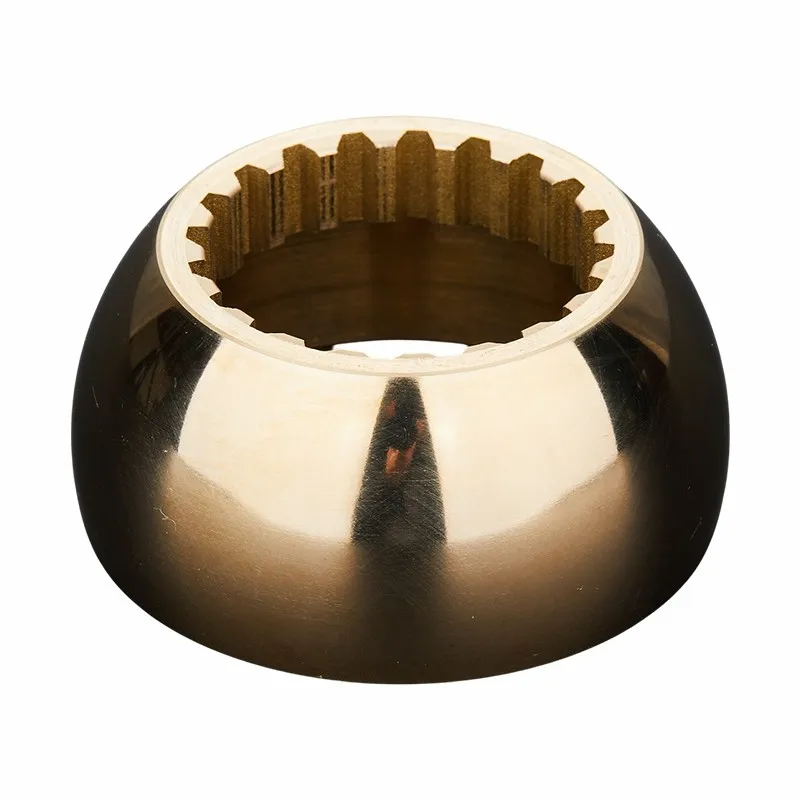
For example, in the inspection of Copper Shell Bearing, ultrasonic testing can be used to detect any internal cracks or voids that may affect its performance. This is crucial as the bearing plays a vital role in the smooth operation of various rail traffic equipment.
Magnetic Particle Inspection
Magnetic particle inspection is another non - destructive testing method commonly used in rail traffic infrastructure inspection. It is mainly used to detect surface and near - surface defects in ferromagnetic materials, such as rails. The process involves magnetizing the component and then applying iron particles to its surface. If there is a defect, the magnetic field is distorted, and the iron particles will accumulate at the defect site, making it visible to the inspector.
Magnetic particle inspection is relatively simple and cost - effective. It can quickly identify surface cracks and other defects that may lead to more serious problems if left undetected. However, it is limited to ferromagnetic materials and can only detect surface and near - surface defects.
Eddy Current Testing
Eddy current testing is a non - contact inspection method that uses electromagnetic induction to detect surface and near - surface defects in conductive materials. When an alternating current is passed through a coil, it generates an alternating magnetic field. When this magnetic field interacts with a conductive material, it induces eddy currents in the material. If there is a defect in the material, the eddy currents are disrupted, and this change can be detected by the testing equipment.
Eddy current testing is particularly useful for inspecting non - ferromagnetic conductive materials, such as some of the components used in Rail Traffic. It can also be used to detect surface cracks, corrosion, and other defects with high sensitivity.
Laser Scanning
Laser scanning technology has become increasingly popular in rail traffic infrastructure inspection. It involves using a laser scanner to create a three - dimensional model of the rail, track, or other components. This model can then be analyzed to detect any deviations from the design specifications, such as changes in the shape or alignment of the rails.
Laser scanning provides highly accurate and detailed information about the infrastructure. It can detect even small changes in the geometry of the components, which may indicate potential problems. For example, a slight change in the rail alignment may not be noticeable during visual inspection but can be easily detected using laser scanning.
Inspection of Rolling Stock
In addition to inspecting the tracks and infrastructure, the rolling stock, including trains and locomotives, also needs to be inspected regularly. The inspection of rolling stock includes checking the wheels, axles, brakes, and other mechanical components.
For the wheels, inspectors look for signs of wear, such as flat spots or excessive tread wear. Flat spots on the wheels can cause vibrations and noise during train operation and can also damage the tracks. Axles are inspected for cracks and other defects using methods such as ultrasonic testing. Brakes are checked to ensure that they are functioning properly, as they are crucial for the safety of the train.
Components like the Plunger Pump Ball Retainer in the train's hydraulic systems are also inspected. These components play an important role in the proper operation of the train's braking and other hydraulic functions.
The Role of Data Analysis in Inspection
With the advancement of technology, data analysis has become an integral part of rail traffic infrastructure inspection. Inspectors collect a large amount of data during the inspection process, including the results of visual inspections, non - destructive testing, and sensor readings. This data can be analyzed to identify trends, predict potential problems, and make informed decisions about maintenance and repair.
For example, by analyzing the data from ultrasonic testing over time, it is possible to track the growth of a crack in a rail and determine when it needs to be replaced. Data analysis can also help in optimizing the inspection schedule, ensuring that resources are used efficiently.
Conclusion
The inspection of rail traffic infrastructure is a complex and multi - faceted process that involves a combination of visual inspection, non - destructive testing methods, and data analysis. Each method has its own advantages and limitations, and they are often used in conjunction to ensure the safety and reliability of the rail network.
As a Rail Traffic supplier, we understand the importance of providing high - quality components and supporting the inspection process. Our products, such as Copper Shell Bearing, Rail Traffic related components, and Plunger Pump Ball Retainer, are designed to meet the strict quality standards of the rail industry.
If you are in the market for high - quality rail traffic components or need more information about our inspection and quality control processes, we encourage you to reach out for a procurement discussion. We are committed to providing the best solutions for your rail traffic needs.
References
- "Railway Track Geometry Inspection: A Review" by X. Liu et al.
- "Non - Destructive Testing in the Rail Industry" by the British Institute of Non - Destructive Testing.
- "Maintenance Strategies for Rail Infrastructure" by the International Union of Railways.


