


Hey there! As a floating bearing supplier, I often get asked, "When should I choose a floating bearing over a fixed bearing?" Well, let's dive right into it and break down the scenarios where a floating bearing is the way to go.
First off, let's understand the basics. A fixed bearing is designed to hold a shaft in place and support radial and axial loads at a specific position. It's like a steadfast anchor, keeping everything stable and in line. On the other hand, a floating bearing allows for some movement along the shaft. It can "float" to accommodate thermal expansion, misalignment, or other dynamic changes in the system.
One of the most common situations where you'd want to choose a floating bearing is in systems that experience significant thermal expansion. You see, when machinery heats up during operation, the components expand. If you're using fixed bearings in such a system, the expansion can create a lot of stress on the bearings and other parts. This stress can lead to premature wear, increased friction, and even mechanical failure.
For example, in large industrial compressors, the temperature can rise quite a bit during operation. Using floating bearings in these compressors allows the shafts to expand freely without causing excessive stress on the bearings. This not only extends the lifespan of the bearings but also improves the overall efficiency of the compressor. And speaking of compressors, check out our Compressor Swash Plate for more related components.
Another scenario where floating bearings shine is in systems with misalignment. Misalignment can occur due to various reasons, such as installation errors, wear and tear, or external forces acting on the machinery. Fixed bearings are not very forgiving when it comes to misalignment. They can quickly start to wear unevenly, leading to noise, vibration, and reduced performance.
Floating bearings, however, can adapt to some degree of misalignment. They can move slightly to compensate for the misaligned shaft, reducing the stress on the bearing and other components. This is particularly important in applications like automotive engines, where there can be slight misalignments between different parts of the engine due to the complex nature of the design.
In the automotive industry, floating bearings are also used in the valve train system. The Valve Guide Pipe in an engine requires precise movement, and floating bearings can help ensure that the valves operate smoothly even under dynamic conditions. The ability of floating bearings to accommodate movement and misalignment helps in maintaining the proper functioning of the valves, which is crucial for the engine's performance.
Now, let's talk about applications where there are dynamic loads. Dynamic loads are those that change in magnitude, direction, or both over time. In systems with dynamic loads, fixed bearings can struggle to handle the constant changes. The repeated loading and unloading can cause fatigue in the bearing material, leading to cracks and eventual failure.
Floating bearings, with their ability to move and adjust, can better handle dynamic loads. They can distribute the load more evenly over the bearing surface, reducing the stress concentration and improving the bearing's durability. For instance, in heavy machinery like construction equipment, where the loads can vary greatly depending on the task at hand, floating bearings are a great choice.
In addition to these technical advantages, floating bearings also offer some practical benefits. They are often easier to install and maintain compared to fixed bearings. Since they allow for some movement, the installation doesn't have to be as precise, which can save time and effort during the setup process. And when it comes to maintenance, it's generally easier to inspect and replace floating bearings because they are not as tightly constrained as fixed bearings.
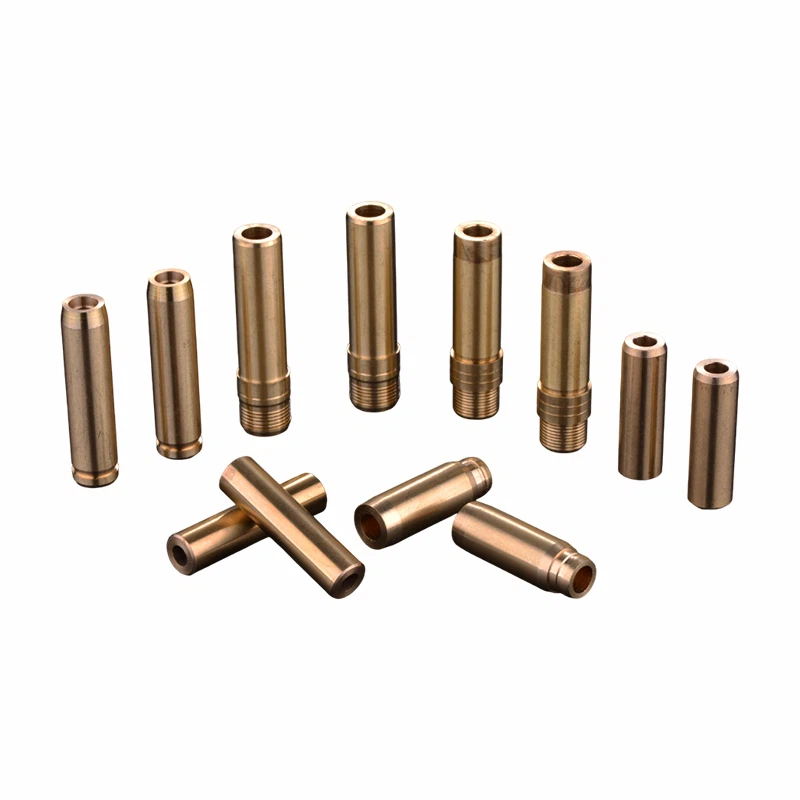

We also offer Cooper Bushing which can be used in conjunction with floating bearings in many applications. These bushings provide additional support and can enhance the performance of the overall system.
So, to sum it up, you should choose a floating bearing over a fixed bearing when:
- Your system experiences significant thermal expansion.
- There is potential for misalignment in the system.
- The system is subjected to dynamic loads.
- You're looking for easier installation and maintenance.
If you're in the market for high - quality floating bearings or related components like the ones I've mentioned above, don't hesitate to reach out. We're here to help you find the right solutions for your specific needs. Whether you're working on a small automotive project or a large industrial application, we've got the expertise and products to support you.
Let's start a conversation about your requirements and see how our floating bearings can make a difference in your machinery. Contact us to get the ball rolling on your next project!
References:
- Machinery's Handbook: A comprehensive guide to mechanical engineering principles and practices.
- Automotive Engineering Textbooks: Covering the design and operation of automotive components.
- Industrial Equipment Manufacturer Manuals: Providing specific information about the use of bearings in different industrial applications.


