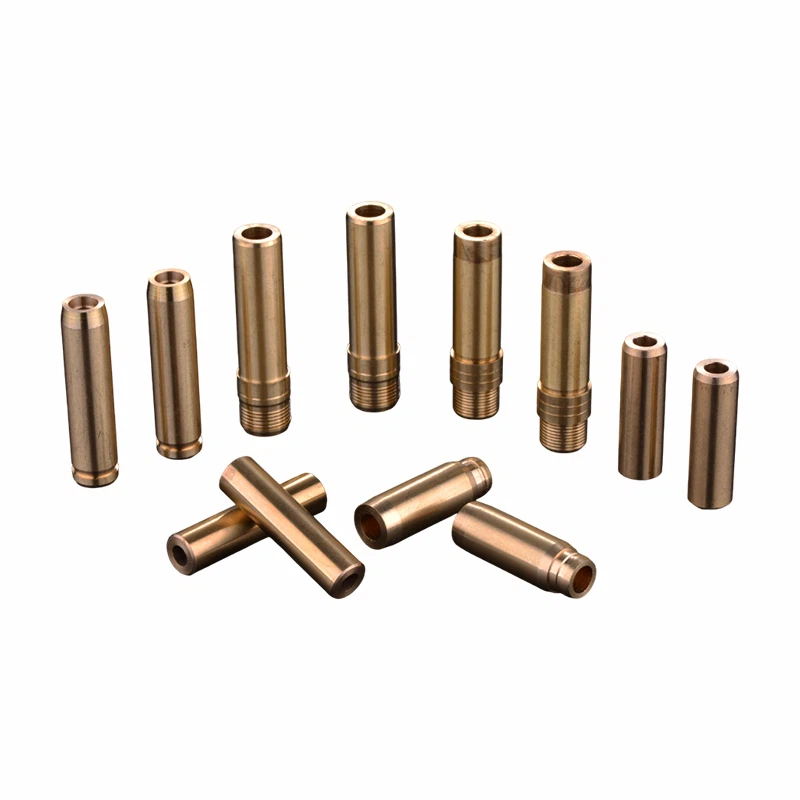
In the vast landscape of the textile industry, the significance of every component cannot be overstated. Among these, copper bushings play a pivotal role, often operating behind the scenes but contributing significantly to the smooth and efficient operation of textile machinery. As a dedicated copper bushing supplier, I am excited to delve into the multifaceted uses of copper bushings in the textile industry.
1. Precision and Durability in Spinning Machines
Spinning is the fundamental process in textile production, where fibers are transformed into yarns. Copper bushings are essential in spinning machines for several reasons. Firstly, they provide high - precision support for rotating shafts. The smooth inner surface of copper bushings ensures that the shafts can rotate with minimal friction, which is crucial for maintaining the accuracy of the spinning process. Any deviation in the rotation of the shafts can lead to uneven yarn thickness, affecting the quality of the final textile product.
Secondly, copper bushings are highly durable. The textile industry operates at high - speed and under continuous stress. Copper, with its excellent wear - resistance properties, can withstand the constant rubbing and pressure from the rotating shafts. This durability reduces the frequency of component replacement, saving both time and money for textile manufacturers. For example, in a large - scale spinning mill, the use of high - quality copper bushings can significantly reduce the downtime caused by equipment maintenance, thereby increasing overall production efficiency.
2. Vibration Dampening in Weaving Machines
Weaving is another critical process in textile manufacturing, where yarns are interlaced to form fabrics. Weaving machines generate a significant amount of vibration during operation. Copper bushings act as effective vibration dampeners. The inherent elasticity of copper allows it to absorb and dissipate the energy generated by vibrations. This is important because excessive vibration can cause damage to the delicate components of the weaving machine, such as the warp and weft yarn guides.
Moreover, by reducing vibration, copper bushings help to improve the stability of the weaving process. A stable weaving environment ensures that the fabric is woven evenly, with consistent thread tension and alignment. This results in a higher - quality fabric with fewer defects. For instance, in the production of high - end silk fabrics, where precision and quality are of utmost importance, the use of copper bushings to dampen vibration can make a significant difference in the final product's appearance and feel.
3. Corrosion Resistance in Dyeing and Finishing Equipment
The dyeing and finishing processes in the textile industry involve the use of various chemicals and high - humidity environments. Copper bushings are highly resistant to corrosion, making them an ideal choice for use in dyeing and finishing equipment. In dyeing machines, where the bushings are constantly exposed to dyes, chemicals, and water, the corrosion - resistant property of copper ensures that the components do not degrade over time.


Corrosion can lead to the loosening of bushings, which can affect the alignment and operation of the equipment. By using copper bushings, textile manufacturers can avoid these issues and ensure the long - term reliability of their dyeing and finishing machinery. For example, in a large - scale textile dyeing plant, the use of copper bushings in the conveyor systems that transport fabrics through the dyeing process can prevent premature failure of the equipment, reducing maintenance costs and improving the overall efficiency of the dyeing process.
4. Compatibility with Different Lubricants
Copper bushings are compatible with a wide range of lubricants. In the textile industry, different types of lubricants are used depending on the specific requirements of the machinery. Some lubricants are designed to reduce friction, while others are used to protect against corrosion. Copper bushings can work effectively with these various lubricants, enhancing their performance.
The ability to work with different lubricants also allows for greater flexibility in the maintenance of textile machinery. Textile manufacturers can choose the most suitable lubricant for their equipment based on factors such as operating conditions, cost, and environmental impact. For example, in a textile factory located in a hot and humid climate, a lubricant with good anti - corrosion properties can be used in combination with copper bushings to ensure optimal performance of the machinery.
5. Customization for Specialized Textile Machinery
As a copper bushing supplier, I understand that the textile industry has a wide variety of specialized machinery, each with its own unique requirements. Copper bushings can be customized to meet these specific needs. Whether it is a small - scale artisanal textile workshop or a large - scale industrial textile plant, customized copper bushings can be designed to fit the exact specifications of the machinery.
Customization can include aspects such as size, shape, and material composition. For example, in a textile machine that requires a bushing with a non - standard diameter or length, we can manufacture a custom - made copper bushing to ensure a perfect fit. This level of customization not only improves the performance of the machinery but also extends its service life.
6. Related Copper - Alloy Products in the Textile Industry
In addition to copper bushings, other copper - alloy products also play important roles in the textile industry. For example, the Plunger Pump Ball Retainer is used in hydraulic systems of some textile machinery. These retainers are made of high - quality copper alloys, which provide excellent strength and corrosion resistance. They ensure the proper functioning of the plunger pumps, which are crucial for the precise control of fluid flow in the machinery.
Another important product is the Valve Plate. Valve plates made of copper alloys are used in hydraulic pumps and control systems. They help to regulate the flow of fluids, ensuring the smooth operation of the textile machinery. The use of copper alloys in valve plates provides good heat dissipation and wear resistance, which is essential for the long - term performance of the equipment.
7. Conclusion and Call to Action
In conclusion, copper bushings are indispensable components in the textile industry. Their precision, durability, vibration - dampening properties, corrosion resistance, compatibility with lubricants, and customizability make them essential for the smooth and efficient operation of textile machinery. Whether it is in spinning, weaving, dyeing, or finishing processes, copper bushings contribute to the production of high - quality textile products.
If you are a textile manufacturer looking for reliable copper bushings or other copper - alloy products for your machinery, I invite you to explore our range of Copper Bushing offerings. Our team of experts is dedicated to providing you with the best - quality products and customized solutions to meet your specific needs. Contact us today to start a procurement discussion and take your textile production to the next level.
References
- Smith, J. (2018). Textile Machinery Handbook. New York: Textile Press.
- Brown, A. (2019). Copper Alloys in Industrial Applications. London: Metal Publishing.
- Chen, L. (2020). Advances in Textile Manufacturing Technology. Beijing: Textile Science Institute.