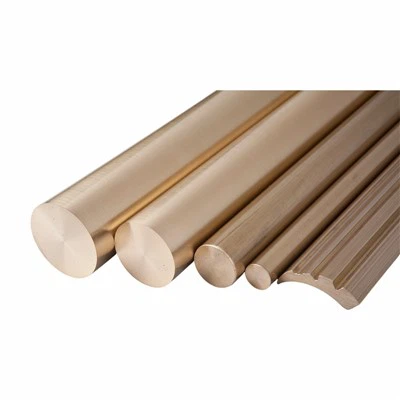
As a trusted supplier of copper bushings, I'm always eager to share in - depth knowledge about the products we offer. Among various aspects, the heat treatment process of copper bushings is crucial as it significantly affects their performance and quality. In this post, I'll delve into what the heat treatment process for copper bushings involves.
Understanding Copper Bushings
Before we get into the heat - treatment process, let's briefly understand what copper bushings are. Copper bushings are mechanical components used in a wide range of applications, from automotive engines to industrial machinery. They serve as bearings, reducing friction between moving parts and providing support. Our Copper Bushing products are crafted with high - quality copper alloys, ensuring durability and efficient operation in diverse environments.
The Purpose of Heat Treatment for Copper Bushings
Heat treatment is a group of industrial and metalworking processes used to alter the physical, and sometimes chemical, properties of a material. For copper bushings, heat treatment primarily aims to:
- Enhance Hardness: By increasing the hardness of copper bushings, we can make them more resistant to wear and deformation. This is particularly important in applications where the bushing is subject to heavy loads and friction, such as in large - scale industrial equipment.
- Improve Ductility: In some cases, we may want to increase the ductility of the copper bushing. Ductile materials can be stretched or bent without breaking, which is useful in applications where the bushing may experience some degree of deformation during installation or operation.
- Relieve Internal Stress: During the manufacturing process, such as casting or machining, internal stresses can build up in the copper bushing. Heat treatment can help relieve these stresses, reducing the risk of cracking or premature failure.
Common Heat Treatment Processes for Copper Bushings
Annealing
Annealing is one of the most common heat - treatment processes for copper bushings. It involves heating the copper bushing to a specific temperature and then slowly cooling it.
- Process Steps:
- First, the copper bushing is heated to a temperature within the annealing range, which typically depends on the type of copper alloy. For example, for some common copper alloys, the annealing temperature may range from 400°C to 700°C.
- Once the desired temperature is reached, the bushing is held at that temperature for a certain period, known as the soaking time. The soaking time allows the internal structure of the copper to become more uniform.
- After the soaking time, the bushing is slowly cooled. This slow cooling can be done in the furnace itself, or in some cases, in a controlled environment outside the furnace.
- Benefits: Annealing softens the copper bushing, improving its ductility and reducing internal stress. This makes the bushing easier to machine and more suitable for applications where it needs to be formed or bent.
Quenching and Tempering
Quenching and tempering is a more complex heat - treatment process that can significantly enhance the hardness and strength of copper bushings.


- Quenching:
- The copper bushing is first heated to a high temperature, usually above its recrystallization temperature. For some copper alloys used in our bushings, this temperature can be around 800°C - 900°C.
- Then, it is rapidly cooled, or quenched, in a quenching medium such as water, oil, or a polymer solution. The rapid cooling rate causes the formation of a hard and brittle structure in the copper.
- Tempering:
- After quenching, the bushing is heated to a lower temperature, typically between 150°C - 400°C, and held at this temperature for a specific time.
- Tempering helps to relieve some of the internal stress created during quenching and improves the toughness of the bushing, reducing the risk of brittleness.
Solution Heat Treatment
Solution heat treatment is often used for copper alloys that contain alloying elements such as nickel, tin, or aluminum.
- Process:
- The copper bushing is heated to a high temperature where the alloying elements dissolve in the copper matrix. This forms a single - phase solid solution.
- After reaching the appropriate temperature, the bushing is rapidly cooled, similar to the quenching process. This traps the alloying elements in the solid solution, creating a supersaturated state.
- Effect: Solution heat treatment can improve the strength and corrosion resistance of the copper bushing. It is especially useful in applications where the bushing is exposed to harsh chemical environments, such as in marine or chemical processing industries.
Factors Affecting the Heat Treatment Process
Several factors can affect the heat - treatment process of copper bushings:
- Copper Alloy Composition: Different copper alloys have different chemical compositions, which means they have different optimal heat - treatment temperatures, soaking times, and cooling rates. For example, a copper - tin alloy may require different heat - treatment parameters compared to a copper - nickel alloy.
- Bushing Size and Shape: Larger or more complexly shaped copper bushings may require different heat - treatment processes to ensure uniform heating and cooling. For instance, a thick - walled bushing may need a longer soaking time to reach the desired internal temperature.
- Desired Properties: The intended use of the copper bushing determines the desired properties, such as hardness, ductility, and corrosion resistance. These requirements will guide the selection of the appropriate heat - treatment process.
Quality Control in Heat Treatment
As a supplier, we understand the importance of quality control in the heat - treatment process. Here are some of the measures we take:
- Temperature Monitoring: We use precise temperature sensors to monitor the temperature during the entire heat - treatment process. This ensures that the bushing is heated and cooled at the correct temperatures.
- Microstructure Analysis: After heat treatment, we conduct microstructure analysis using techniques such as microscopy. This helps us verify that the heat - treatment process has achieved the desired changes in the internal structure of the copper bushing.
- Mechanical Testing: We perform mechanical tests such as hardness testing and tensile testing on the heat - treated copper bushings. These tests help us ensure that the bushing meets the required mechanical properties.
Applications of Heat - Treated Copper Bushings
Heat - treated copper bushings have a wide range of applications. In addition to the Copper Bushing itself, other related products in our hydraulic pump parts series such as Plunger Pump Ball Retainer and Valve Plate also benefit from similar heat - treatment processes.
- Automotive Industry: Heat - treated copper bushings are used in engines, transmissions, and suspension systems. Their high wear resistance and strength ensure reliable performance in the demanding automotive environment.
- Industrial Machinery: In industrial equipment such as pumps, compressors, and conveyors, copper bushings play a vital role in reducing friction and supporting moving parts. Heat treatment enhances their durability and performance in these applications.
- Aerospace Industry: The aerospace industry requires components with high strength - to - weight ratios and excellent corrosion resistance. Heat - treated copper bushings meet these requirements and are used in various aircraft systems.
Contact Us for Your Copper Bushing Needs
If you're in the market for high - quality copper bushings or other related hydraulic pump parts, we're here to help. Our team of experts can provide detailed information about the heat - treatment processes we use and how they benefit your specific applications. Whether you need a small quantity for a prototype or a large - scale production order, we have the capacity and expertise to meet your requirements. Don't hesitate to reach out to us to discuss your needs and start a procurement negotiation.
References
- "Metals Handbook: Heat Treating", ASM International.
- "Copper and Copper Alloys", C. W. Tobias, John Wiley & Sons.