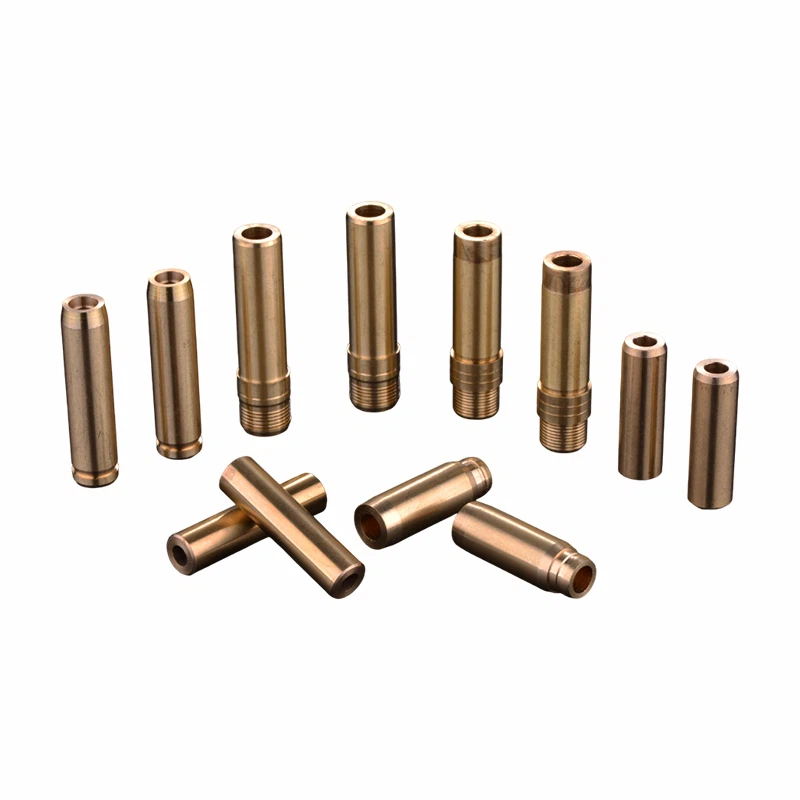
Yo, what's up everyone! I'm a supplier of Cooper Worm Wheels, and today I wanna talk about the elasticity of these bad boys. So, let's dive right in.
First off, you might be wondering what elasticity even means in the context of a Cooper Worm Wheel. Well, elasticity is all about how a material can deform under stress and then go back to its original shape once the stress is removed. In the case of our Cooper Worm Wheels, this property is super important for a bunch of reasons.
Let's start with the basics. Cooper Worm Wheels are used in all sorts of machinery. They're part of the worm and worm wheel mechanism, which is a pretty common setup for transmitting motion and power between two non - parallel shafts. You can check out more about the mechanism on our Cooper Worm Wheel page.
The elasticity of a Cooper Worm Wheel comes from the copper alloy it's made of. Copper alloys have this cool ability to stretch and bend a bit when they're under pressure. This is really handy because in a worm and worm wheel system, there's a lot of contact and friction between the worm and the wheel. When the worm rotates and engages with the wheel, it puts a force on the teeth of the wheel. If the wheel wasn't elastic, those teeth could crack or break pretty easily.
Imagine you're riding a bike. When you pedal, the chain puts a force on the gears. If the gears were made of a completely rigid material, they'd wear out quickly or even shatter under the stress. But because they have some elasticity, they can handle the pressure and keep working smoothly. It's the same idea with our Cooper Worm Wheels.
Now, let's talk about the benefits of this elasticity. One major advantage is that it helps with shock absorption. In a real - world application, there can be sudden jolts or impacts in the machinery. For example, in a conveyor belt system that uses a worm and worm wheel mechanism, if there's a sudden blockage or a heavy load is dropped on the belt, the Cooper Worm Wheel can absorb some of that shock. The elastic deformation allows it to take the hit without causing major damage to the rest of the system.
Another benefit is that it improves the overall efficiency of the worm and worm wheel mechanism. When the wheel is elastic, it can conform a bit to the shape of the worm. This means that the contact between the two is more even, which reduces friction. Less friction means less energy is wasted as heat, and the system can run more smoothly and use less power.
There are different types of worm wheels in the market, like the Worm Sector and the Circular Worm Gear. But our Cooper Worm Wheels stand out because of their unique elasticity properties. The specific copper alloy we use is carefully selected and processed to give the perfect balance of strength and elasticity.
The elasticity also affects the wear and tear of the Cooper Worm Wheel. Since it can deform and then return to its original shape, it doesn't wear down as quickly as a less elastic material. This means a longer lifespan for the wheel, which is great news for our customers. They don't have to replace the wheels as often, which saves them time and money in the long run.
But it's not all sunshine and rainbows. There are some challenges with the elasticity too. For example, if the elastic limit of the copper alloy is exceeded, the wheel can get permanently deformed. This usually happens when there's an extremely high - load situation that the wheel isn't designed to handle. That's why it's important to choose the right Cooper Worm Wheel for the specific application. We work closely with our customers to understand their needs and recommend the best wheel for their machinery.
In terms of testing, we have a strict quality control process. We use advanced testing equipment to measure the elasticity of each Cooper Worm Wheel we produce. We check things like the modulus of elasticity, which is a measure of how stiff the material is. We also do fatigue testing to see how well the wheel can handle repeated stress over time.
So, if you're in the market for a reliable and high - performance worm wheel, our Cooper Worm Wheels are a great choice. The elasticity gives them an edge over other options in the market. Whether you're in the manufacturing industry, the automotive sector, or any other field that uses worm and worm wheel mechanisms, our wheels can make your machinery work better and last longer.
If you're interested in learning more about our Cooper Worm Wheels or want to discuss a potential purchase, don't hesitate to reach out. We're always happy to talk to our customers and help them find the right solution for their needs.


References
- "Materials Science and Engineering: An Introduction" by William D. Callister Jr. and David G. Rethwisch
- "Mechanical Design of Machine Elements and Machines: A Failure - Prevention Perspective" by Jack A. Collins, George H. Busby, and Harry H. Staab