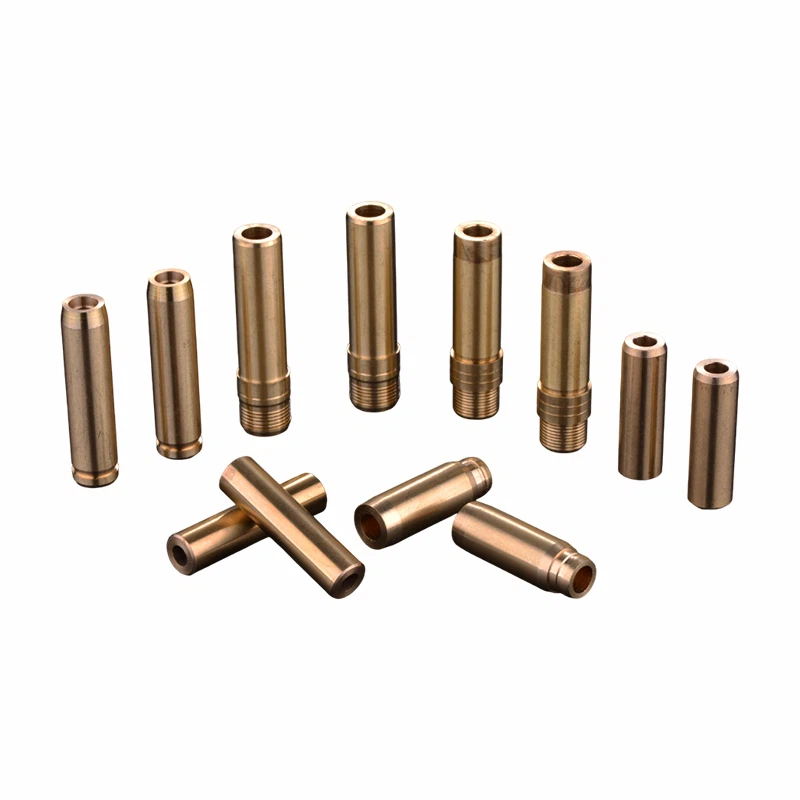
Bronze alloys have been an integral part of human civilization for thousands of years, finding applications in various industries due to their unique properties. As a leading supplier of bronze alloys, I've witnessed firsthand the diverse requirements and applications that these alloys cater to, from Bronze Square Rod used in precision engineering to Bronze Shaped Tube and Bronze Round Bar in architectural and decorative works. One of the key factors that significantly influence the performance and characteristics of bronze alloys is the aluminum content. In this blog, we'll delve into the effects of aluminum content on bronze alloys and how it impacts their applications.
Understanding Bronze Alloys
Bronze is an alloy primarily composed of copper, with tin being the traditional alloying element. However, modern bronze alloys can include a variety of other elements such as aluminum, nickel, zinc, and phosphorus, each contributing to specific properties. Aluminum bronze, in particular, has gained significant popularity due to its excellent combination of strength, corrosion resistance, and wear resistance.
Effects of Aluminum Content on Mechanical Properties
Strength and Hardness
One of the most notable effects of increasing aluminum content in bronze alloys is the improvement in strength and hardness. Aluminum forms intermetallic compounds with copper, such as Cu₃Al and CuAl₂, which act as strengthening agents. These compounds impede the movement of dislocations within the crystal lattice, making it more difficult for the material to deform. As a result, aluminum bronze alloys with higher aluminum content exhibit greater yield strength, ultimate tensile strength, and hardness.
For example, a bronze alloy with a low aluminum content (around 5%) may have a yield strength of approximately 200 MPa, while an alloy with a higher aluminum content (around 10%) can have a yield strength of over 400 MPa. This increase in strength makes aluminum bronze suitable for applications where high mechanical loads are expected, such as in heavy machinery components, gears, and bearings.
Ductility and Toughness
While increasing aluminum content generally enhances strength and hardness, it can also have a negative impact on ductility and toughness. As the aluminum content rises, the formation of brittle intermetallic compounds becomes more pronounced, reducing the ability of the material to deform plastically before fracture. This means that aluminum bronze alloys with very high aluminum content may be more prone to cracking and failure under impact or sudden loading conditions.
However, careful control of the alloy composition and heat treatment processes can help mitigate these effects. For instance, adding small amounts of other elements like nickel or manganese can improve the ductility and toughness of aluminum bronze alloys. Additionally, proper heat treatment can refine the microstructure and reduce the brittleness associated with high aluminum content.
Effects of Aluminum Content on Corrosion Resistance
General Corrosion
Aluminum plays a crucial role in enhancing the corrosion resistance of bronze alloys. When exposed to oxygen, aluminum forms a thin, protective oxide layer on the surface of the alloy. This layer acts as a barrier, preventing further oxidation and corrosion of the underlying metal. As a result, aluminum bronze alloys exhibit excellent resistance to general corrosion in a wide range of environments, including seawater, freshwater, and industrial chemicals.
The effectiveness of the protective oxide layer depends on the aluminum content. Alloys with higher aluminum content tend to form a more stable and adherent oxide layer, providing better long-term corrosion protection. For example, aluminum bronze alloys with an aluminum content of 8 - 12% are commonly used in marine applications due to their superior resistance to seawater corrosion.
Pitting and Crevice Corrosion
In addition to general corrosion, aluminum bronze alloys also show good resistance to pitting and crevice corrosion. Pitting corrosion occurs when small holes or pits form on the surface of the metal due to the breakdown of the protective oxide layer in localized areas. Crevice corrosion, on the other hand, occurs in narrow gaps or crevices where the flow of oxygen and other corrosive agents is restricted.
The presence of aluminum in bronze alloys helps to inhibit the initiation and propagation of pitting and crevice corrosion. The protective oxide layer formed by aluminum can repair itself in the presence of oxygen, preventing the formation of pits and crevices. However, in highly aggressive environments or under certain conditions, such as low pH or high chloride concentrations, the corrosion resistance of aluminum bronze alloys may be compromised.
Effects of Aluminum Content on Wear Resistance
Abrasive Wear
Aluminum bronze alloys are known for their excellent wear resistance, making them suitable for applications where friction and abrasion are involved. The addition of aluminum to bronze alloys increases the hardness and strength of the material, which in turn improves its resistance to abrasive wear. Harder materials are less likely to be worn away by the action of abrasive particles, such as sand, gravel, or other hard surfaces.
The wear resistance of aluminum bronze alloys increases with increasing aluminum content up to a certain point. Beyond this optimal aluminum content, the brittleness of the alloy may start to affect its wear resistance, as brittle materials are more prone to cracking and fragmentation under abrasive conditions. Therefore, the aluminum content needs to be carefully balanced to achieve the best combination of wear resistance and other mechanical properties.
Adhesive Wear
Adhesive wear occurs when two surfaces in contact with each other stick together and material is transferred from one surface to the other. Aluminum bronze alloys exhibit good resistance to adhesive wear due to their high hardness and the presence of a lubricious oxide layer on the surface. The oxide layer reduces the friction between the surfaces and prevents direct metal-to-metal contact, which helps to minimize adhesive wear.
The aluminum content in bronze alloys can influence the formation and properties of the oxide layer, thereby affecting its adhesive wear resistance. Alloys with higher aluminum content tend to form a more stable and lubricious oxide layer, providing better protection against adhesive wear.
Applications of Aluminum Bronze Alloys Based on Aluminum Content
Low Aluminum Content (up to 5%)
Bronze alloys with low aluminum content are often used in applications where good ductility and formability are required, such as in the production of Bronze Square Rod for intricate machining operations. These alloys also have relatively good corrosion resistance and can be used in mild corrosive environments, such as freshwater applications.
Medium Aluminum Content (5 - 10%)
Aluminum bronze alloys with medium aluminum content offer a good balance of strength, hardness, ductility, and corrosion resistance. They are widely used in a variety of engineering applications, including bearings, bushings, gears, and valve components. These alloys are also suitable for marine applications, where they can withstand the corrosive effects of seawater.


High Aluminum Content (over 10%)
Alloys with high aluminum content are characterized by their high strength, hardness, and excellent wear and corrosion resistance. They are commonly used in heavy-duty applications, such as in the mining, oil and gas, and aerospace industries. For example, Bronze Round Bar made from high-aluminum bronze alloys can be used in the production of shafts, couplings, and other critical components that require high strength and wear resistance.
Conclusion
The aluminum content in bronze alloys has a profound effect on their mechanical properties, corrosion resistance, and wear resistance. By carefully controlling the aluminum content and other alloying elements, it is possible to tailor the properties of bronze alloys to meet the specific requirements of different applications. As a bronze alloys supplier, we understand the importance of providing high-quality alloys that meet the diverse needs of our customers. Whether you need Bronze Square Rod, Bronze Shaped Tube, or Bronze Round Bar, we can offer you the right alloy with the optimal aluminum content for your application.
If you're interested in learning more about our bronze alloys or would like to discuss your specific requirements, please don't hesitate to contact us. Our team of experts is ready to assist you in finding the best solution for your project.
References
- Davis, J. R. (Ed.). (2001). Aluminum Bronzes. ASM International.
- Schlesinger, M. E. (2008). Corrosion Basics: An Introduction. NACE International.
- Totten, G. E., & MacKenzie, D. S. (2003). Handbook of Aluminum Alloy and Temper Designations. ASM International.