


When it comes to the world of bronze products, one question that often arises among our customers is: What is the diameter of the bronze shaped rod? As a dedicated supplier of Bronze Shaped Rod, I'm here to provide a comprehensive exploration of this topic.
Understanding Bronze Shaped Rods
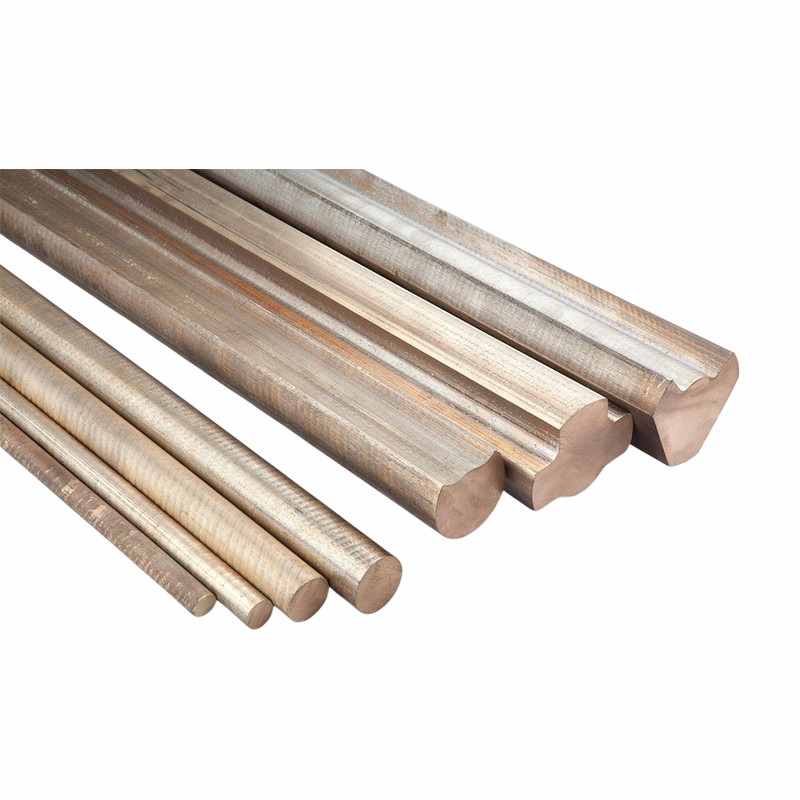
Bronze shaped rods are versatile components used in a wide range of industries, from automotive and aerospace to construction and art. These rods are made from bronze, an alloy primarily composed of copper and tin, with other elements sometimes added to enhance specific properties. The "shaped" aspect of these rods means they can have various cross - sectional geometries, such as square, rectangular, hexagonal, or even custom - designed shapes.
Factors Influencing the Diameter
Application Requirements
The diameter of a bronze shaped rod is largely determined by its intended application. For instance, in precision engineering, where components need to fit into tight spaces, smaller diameter rods are often required. These rods can be used for creating intricate parts in watches, medical devices, or electronic components. On the other hand, in heavy - duty construction or industrial machinery, larger diameter rods are necessary to withstand high loads and stresses. A large - diameter bronze rod might be used as a structural support in a bridge or as a drive shaft in a large - scale manufacturing machine.
Manufacturing Processes
The manufacturing process also plays a crucial role in determining the available diameters of bronze shaped rods. Extrusion is a common method for producing bronze rods. In extrusion, a heated bronze billet is forced through a die to create the desired shape and size. The size of the extrusion equipment and the limitations of the die design will restrict the range of diameters that can be produced. For example, smaller dies can be used to create rods with diameters as small as a few millimeters, while larger extrusion presses can handle the production of rods with diameters up to several inches.
Another manufacturing method is forging. Forging involves shaping the bronze by applying compressive forces. This process can be used to produce rods with larger diameters and better mechanical properties, especially when high strength and durability are required. However, forging is a more labor - intensive and capital - intensive process, and it may not be suitable for producing very small - diameter rods.
Material Properties
The properties of the bronze alloy itself can influence the diameter selection. Different bronze alloys have different flow characteristics during manufacturing. Some alloys may be more difficult to form into very thin rods due to their high viscosity or brittleness. For example, a bronze alloy with a high tin content may be more prone to cracking during the extrusion process if the rod diameter is too small. In contrast, alloys with better malleability and ductility can be formed into a wider range of diameters.
Common Diameter Ranges
In our experience as a Bronze Shaped Rod supplier, we offer a wide range of diameters to meet the diverse needs of our customers. For small - scale applications, we can provide rods with diameters starting from as little as 1 millimeter. These ultra - thin rods are often used in micro - engineering and jewelry making.
For general industrial applications, we commonly supply rods with diameters ranging from 3 millimeters to 50 millimeters. These rods are suitable for a variety of uses, such as in the production of bushings, bearings, and small - to - medium - sized machine parts.
In cases where heavy - duty applications are required, we can manufacture bronze shaped rods with diameters up to 200 millimeters or more. These large - diameter rods are typically used in large - scale construction projects, power generation equipment, and heavy machinery.
Comparison with Other Bronze Products
It's also interesting to compare the diameter considerations of bronze shaped rods with other bronze products, such as Bronze Shaped Tube and Bronze Round Bar.
Bronze Shaped Tube
A bronze shaped tube is a hollow structure, and its diameter is usually defined by the outer diameter. Similar to bronze shaped rods, the diameter of a bronze tube is determined by application requirements. However, in the case of tubes, the wall thickness also needs to be considered. For example, in fluid - carrying applications, a larger outer diameter may be required to accommodate a higher flow rate, while the wall thickness needs to be sufficient to withstand the internal pressure. In some cases, the inner diameter of the tube may be more critical, especially when it needs to fit over another component or when the flow characteristics of the fluid are affected by the internal diameter.
Bronze Round Bar
A bronze round bar has a circular cross - section. The diameter of a round bar is a straightforward measurement, and it is often used in applications where a uniform cross - section and high symmetry are required. Round bars are commonly used in the production of shafts, pins, and fasteners. The diameter of a round bar is selected based on the same factors as a shaped rod, such as the load - bearing capacity, the size of the mating components, and the manufacturing process. However, round bars may have a more standardized range of diameters compared to shaped rods, as they are more commonly used in mass - produced components.
Quality Control and Diameter Accuracy
At our company, we understand the importance of diameter accuracy in bronze shaped rods. We have a strict quality control system in place to ensure that the rods we supply meet the specified diameter requirements. Our quality control process starts with the selection of high - quality bronze alloys. We source our raw materials from trusted suppliers and conduct thorough material testing to ensure their chemical composition and mechanical properties meet our standards.
During the manufacturing process, we use advanced measuring equipment, such as calipers, micrometers, and laser measuring devices, to monitor the diameter of the rods at various stages. Any deviations from the specified diameter are immediately addressed through process adjustments. For example, if the diameter of a rod is slightly larger than the required size, we may adjust the extrusion speed or the die temperature to correct the dimension.
After the rods are manufactured, they undergo a final inspection. We measure the diameter at multiple points along the length of the rod to ensure uniformity. Only rods that meet our strict diameter tolerance requirements are approved for shipment. Our typical diameter tolerance for bronze shaped rods is within ±0.05 millimeters for small - diameter rods and ±0.1 - 0.5 millimeters for larger - diameter rods, depending on the specific application and customer requirements.
Conclusion
In conclusion, the diameter of a bronze shaped rod is a critical parameter that is influenced by a variety of factors, including application requirements, manufacturing processes, and material properties. As a Bronze Shaped Rod supplier, we are committed to providing our customers with high - quality rods in a wide range of diameters to meet their diverse needs. Whether you need a small - diameter rod for a precision application or a large - diameter rod for a heavy - duty project, we have the expertise and capabilities to deliver the right product.

If you are interested in purchasing bronze shaped rods or have any questions about the diameter and other specifications, we invite you to contact us for a detailed discussion. Our team of experts is ready to assist you in selecting the most suitable bronze shaped rods for your specific application and to provide you with a competitive quote.
References
- Metals Handbook, Volume 2: Properties and Selection: Nonferrous Alloys and Special - Purpose Materials. ASM International.
- Copper and Copper Alloys: Properties, Processing, and Applications. Springer.
- Handbook of Bronze Alloys: Composition, Properties, and Applications. CRC Press.


