Hey there, folks! As a supplier of cylinder blocks, I often get asked about the compression ratio in a cylinder block. So, I thought I'd take a few minutes to break it down for you in simple terms.
First off, let's talk about what a cylinder block is. If you're into engines, you know that the cylinder block is like the heart of an engine. It's a big chunk of metal that houses the cylinders where the pistons move up and down. The whole engine's performance depends a lot on this part.
Now, the compression ratio. What on earth is it? Well, it's basically a comparison between the volume of the cylinder when the piston is at the bottom of its stroke (the bottom dead center, or BDC) and the volume when the piston is at the top of its stroke (the top dead center, or TDC).
Let's put it into a real - world example. Say you have a cylinder with a total volume of 500 cubic centimeters when the piston is at BDC. And when the piston moves up to TDC, the volume left in the cylinder is 50 cubic centimeters. To calculate the compression ratio, you divide the volume at BDC by the volume at TDC. In this case, 500 divided by 50 gives you a compression ratio of 10:1.
Why is this compression ratio such a big deal? Well, it has a huge impact on how an engine performs. A higher compression ratio means that the air - fuel mixture in the cylinder is squeezed more tightly before it's ignited. When you squeeze something really hard, you can get more energy out of it when it explodes. So, engines with higher compression ratios generally have better power output and fuel efficiency.
But it's not all sunshine and rainbows with high compression ratios. The more you compress that air - fuel mixture, the more heat is generated. This can lead to a problem called engine knocking. Engine knocking is when the air - fuel mixture ignites prematurely, before the spark plug fires. It can cause damage to the engine over time and reduce its performance. So, engine designers have to find a sweet spot for the compression ratio.
In different types of engines, the ideal compression ratio varies. For example, in a gasoline engine, compression ratios usually range from about 8:1 to 12:1. Diesel engines, on the other hand, typically have much higher compression ratios, often between 14:1 and 22:1. The reason for this difference is the way these two types of engines work. Gasoline engines use a spark plug to ignite the air - fuel mixture, while diesel engines rely on the heat generated by compression to ignite the fuel.
As a cylinder block supplier, I know how important it is to make sure the cylinder blocks we supply are designed to handle the right compression ratio. We have to use high - quality materials and precise manufacturing processes. The walls of the cylinder need to be strong enough to withstand the high pressures generated during compression.
When we're making a cylinder block, we take into account the intended use of the engine. If it's for a high - performance sports car, we might design it to handle a higher compression ratio. But if it's for a more everyday, economy - focused vehicle, a lower compression ratio might be more appropriate.
Now, let's talk about some related parts in the engine. You might be interested in components like the Plunger Pump Ball Retainer. This part plays a crucial role in the hydraulic system of the engine. It helps to keep the balls in place in the plunger pump, ensuring smooth operation.
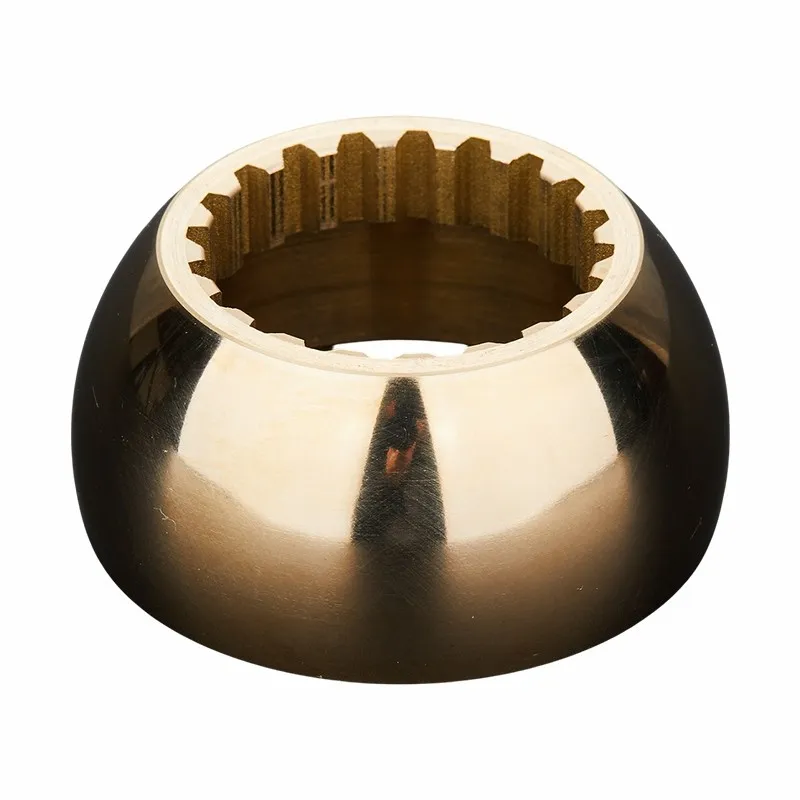

Another important part is the Valve Plate. The valve plate controls the flow of the air - fuel mixture in and out of the cylinder. It needs to be made with precision to ensure proper engine performance.
And then there's the Plunger Pump Accessories Pressure Plate. This plate helps to maintain the right pressure in the plunger pump, which is essential for the overall functioning of the hydraulic system.
If you're in the market for cylinder blocks or any of these related parts, you've come to the right place. We've got a team of experts who can help you find the right components for your engine. Whether you're a small - scale engine builder or a large - scale automotive manufacturer, we can provide you with high - quality products that meet your needs.
We understand that every engine is different, and that's why we offer customized solutions. We can work with you to design and manufacture cylinder blocks with the perfect compression ratio for your specific application.
So, if you're interested in learning more about our products or have any questions about compression ratios or engine components, don't hesitate to reach out. We're here to help you get the most out of your engines.
In conclusion, the compression ratio in a cylinder block is a critical factor in engine performance. It's a balance between getting the most power and efficiency while avoiding problems like engine knocking. As a cylinder block supplier, we're dedicated to providing the best products to help you achieve that balance.
References
- Automotive Engineering textbooks
- Industry research papers on engine design and performance