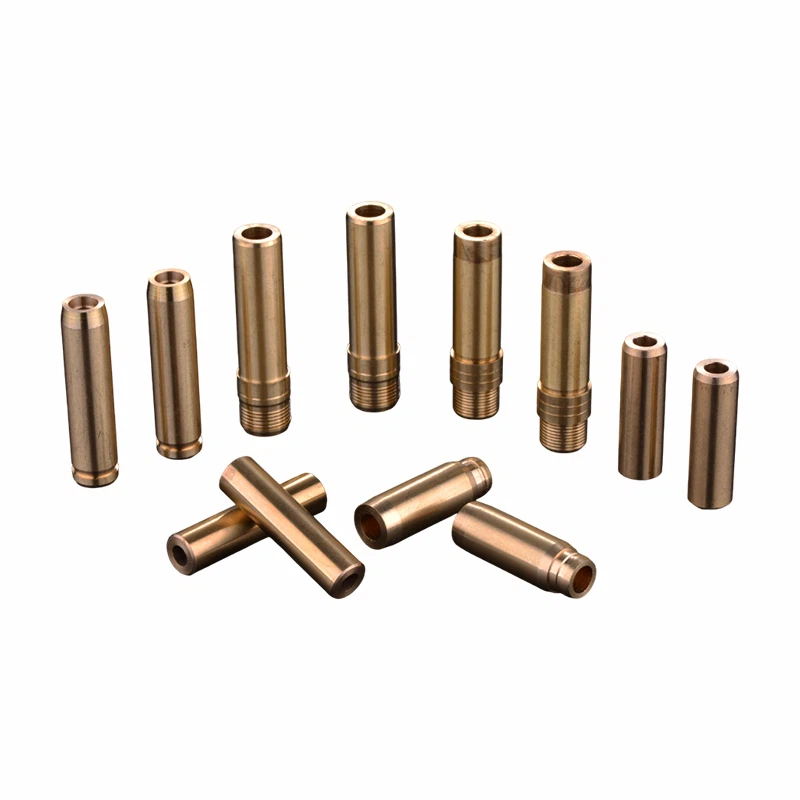
As a dedicated supplier of Cooper Worm Wheels, I've delved deep into the technical aspects of these remarkable components. One of the most frequently asked questions in the industry is about the coefficient of friction of Cooper Worm Wheels. In this blog, I aim to shed light on this crucial topic, exploring its significance, influencing factors, and practical implications.
Understanding the Coefficient of Friction
The coefficient of friction is a fundamental concept in the field of tribology, which studies the interaction between surfaces in relative motion. It quantifies the resistance to sliding between two surfaces in contact. In the context of Cooper Worm Wheels, the coefficient of friction plays a pivotal role in determining the efficiency, performance, and durability of the worm gear system.
A lower coefficient of friction implies less energy loss due to friction, resulting in higher efficiency and reduced wear and tear. On the other hand, a higher coefficient of friction can lead to increased heat generation, power consumption, and premature failure of the components. Therefore, understanding and controlling the coefficient of friction is essential for optimizing the performance of Cooper Worm Wheels.
Factors Influencing the Coefficient of Friction
Several factors can influence the coefficient of friction of Cooper Worm Wheels. Let's take a closer look at some of the most significant ones:
Material Properties
The materials used in the manufacturing of the worm and the worm wheel have a profound impact on the coefficient of friction. Copper alloys, which are commonly used in Cooper Worm Wheels, offer excellent wear resistance, corrosion resistance, and low friction characteristics. The specific composition of the copper alloy, as well as the heat treatment and surface finishing processes, can further affect the friction properties.
Surface Roughness
The surface roughness of the worm and the worm wheel also plays a crucial role in determining the coefficient of friction. A smoother surface generally results in lower friction, as there are fewer asperities (tiny bumps) to interlock and resist sliding. However, achieving an extremely smooth surface may not always be practical or cost-effective. Therefore, a balance needs to be struck between surface roughness and other factors such as wear resistance and load-carrying capacity.
Lubrication
Lubrication is another key factor that can significantly reduce the coefficient of friction. A proper lubricant forms a thin film between the worm and the worm wheel, separating the surfaces and reducing direct contact. This not only reduces friction but also helps to dissipate heat and prevent wear and corrosion. The type of lubricant, its viscosity, and the lubrication method (e.g., splash lubrication, forced lubrication) all need to be carefully selected based on the operating conditions and requirements of the worm gear system.
Load and Speed
The load applied to the worm gear system and the rotational speed of the worm can also affect the coefficient of friction. Higher loads and speeds generally result in increased friction, as the surfaces are subjected to greater forces and stresses. However, the relationship between load, speed, and friction is complex and can be influenced by other factors such as lubrication and material properties.
Measuring the Coefficient of Friction
Measuring the coefficient of friction of Cooper Worm Wheels can be a challenging task, as it requires specialized equipment and techniques. One common method is to use a friction tester, which applies a known load to the worm and the worm wheel and measures the force required to initiate and maintain sliding. The coefficient of friction can then be calculated using the formula:
Coefficient of friction = Frictional force / Normal force
Another approach is to use numerical simulation techniques, such as finite element analysis (FEA), to model the contact between the worm and the worm wheel and predict the coefficient of friction. This method can provide valuable insights into the behavior of the worm gear system under different operating conditions and help to optimize its design.
Practical Implications of the Coefficient of Friction
The coefficient of friction of Cooper Worm Wheels has several practical implications for the performance and reliability of the worm gear system. Here are some of the key points to consider:
Efficiency
As mentioned earlier, a lower coefficient of friction results in higher efficiency, as less energy is lost due to friction. This can lead to significant energy savings, especially in applications where the worm gear system operates continuously or at high loads.
Wear and Tear
Friction between the worm and the worm wheel can cause wear and tear, which can eventually lead to failure of the components. By reducing the coefficient of friction, the wear rate can be minimized, extending the service life of the worm gear system and reducing maintenance costs.
Heat Generation
Friction also generates heat, which can cause thermal expansion, deformation, and even damage to the components. A lower coefficient of friction helps to reduce heat generation, ensuring that the worm gear system operates within a safe temperature range and preventing premature failure.


Noise and Vibration
Excessive friction can also lead to noise and vibration in the worm gear system, which can be a nuisance and may even affect the performance of other components. By optimizing the coefficient of friction, the noise and vibration levels can be reduced, improving the overall comfort and reliability of the system.
Conclusion
In conclusion, the coefficient of friction is a critical parameter that affects the performance, efficiency, and durability of Cooper Worm Wheels. By understanding the factors that influence the coefficient of friction and taking appropriate measures to control it, we can optimize the design and operation of the worm gear system, ensuring its reliable and efficient performance.
As a supplier of Cooper Worm Wheels, we are committed to providing high-quality products that meet the specific requirements of our customers. Our team of experts has extensive experience in the field of worm gear technology and can provide valuable advice and support on the selection, installation, and maintenance of Cooper Worm Wheels.
If you are interested in learning more about Cooper Worm Wheels or would like to discuss your specific requirements, please feel free to contact us. We look forward to the opportunity to work with you and help you achieve your goals.
References
- "Tribology Handbook" by Bhushan, B.
- "Mechanical Design of Machine Elements and Machines: A Failure Prevention Perspective" by Spotts, M. F., Shoup, T. E., & Bolin, R. E.
- "Design of Machine Elements" by V. B. Bhandari