


As a reputable floating bearing supplier, I understand the significance of noise reduction in the operation of floating bearings. Noise generated by floating bearings can not only cause discomfort but also indicate potential issues that may affect the overall performance and lifespan of the machinery. In this blog, I will explore various noise - reduction measures for floating bearings.
1. Bearing Material Selection
The choice of material for floating bearings plays a crucial role in noise reduction. High - quality materials with excellent damping properties can effectively absorb and dissipate vibration energy, thereby reducing noise. For example, some advanced copper - alloy materials have been widely used in the manufacturing of floating bearings. These copper - alloy materials offer good wear resistance, corrosion resistance, and damping characteristics.
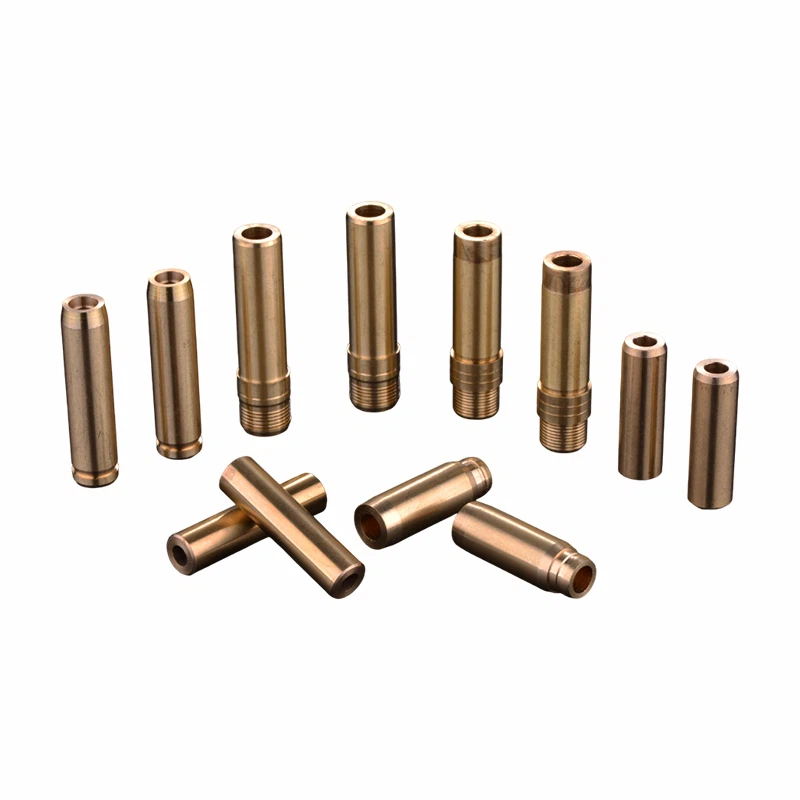

Our company provides a wide range of copper - alloy products, such as the Valve Guide Pipe, Compressor Swash Plate, and Cooper Bushing. These products are made from carefully selected copper - alloy materials, which can contribute to the noise - reduction effect of the floating bearings.
2. Precision Manufacturing
Precision manufacturing is another key factor in reducing noise from floating bearings. During the manufacturing process, any deviation in dimensions, surface finish, or shape can lead to uneven contact between the bearing and other components, resulting in increased vibration and noise.
To ensure high - precision manufacturing, advanced machining techniques and equipment are employed. For instance, computer - numerical - control (CNC) machining can achieve extremely high accuracy in dimension control. Additionally, strict quality control measures are implemented at every stage of production. Each floating bearing is carefully inspected to ensure that it meets the required standards in terms of roundness, cylindricity, and surface roughness. By minimizing manufacturing errors, the smooth operation of the floating bearing can be guaranteed, and noise can be effectively reduced.
3. Lubrication
Proper lubrication is essential for noise reduction in floating bearings. Lubricants can form a thin film between the bearing surfaces, reducing friction and wear. This not only extends the service life of the bearing but also helps to dampen vibrations and reduce noise.
There are different types of lubricants available, such as grease and oil. The choice of lubricant depends on various factors, including the operating conditions of the floating bearing, such as speed, load, and temperature. For high - speed applications, oil lubrication is often preferred as it can provide better cooling and more effective lubrication. In contrast, grease lubrication is suitable for low - speed and sealed applications, as it is easier to maintain and can prevent the ingress of contaminants.
Regular lubricant replacement and monitoring are also necessary. Over time, lubricants can degrade due to oxidation, contamination, and mechanical shear. By replacing the lubricant at the recommended intervals and monitoring its condition, the optimal lubrication performance can be maintained, and noise reduction can be ensured.
4. Vibration Isolation
Vibration isolation is an effective way to prevent the transmission of vibration and noise from the floating bearing to the surrounding environment. This can be achieved through the use of vibration - isolating materials or structures.
For example, rubber mounts or dampers can be installed between the floating bearing and its supporting structure. These rubber components can absorb and dissipate vibration energy, reducing the amplitude of vibration and the resulting noise. In addition, the design of the mounting structure can also be optimized to enhance vibration isolation. By increasing the stiffness and damping of the mounting structure, the transmission of vibration can be minimized.
5. Dynamic Balancing
Dynamic balancing is crucial for floating bearings, especially those operating at high speeds. Unbalanced bearings can generate significant vibration and noise due to the centrifugal forces acting on the unevenly distributed mass.
To achieve dynamic balancing, the floating bearing is carefully measured and adjusted. Specialized balancing equipment is used to detect the unbalance of the bearing and determine the amount and location of the correction weights. By adding or removing these correction weights, the mass distribution of the bearing can be made more uniform, and the vibration and noise caused by unbalance can be eliminated.
6. Design Optimization
The design of the floating bearing itself can also be optimized for noise reduction. For example, the internal geometry of the bearing, such as the profile of the raceway and the shape of the rolling elements, can be designed to reduce the impact and friction during operation.
Some advanced bearing designs incorporate features such as tapered raceways or spherical rolling elements. These designs can improve the load - distribution characteristics of the bearing, reducing the stress concentration and minimizing the generation of vibration and noise. In addition, the overall structure of the floating bearing can be designed to enhance its damping properties, further contributing to noise reduction.
7. Environmental Considerations
The operating environment of the floating bearing can have a significant impact on noise generation. Factors such as temperature, humidity, and the presence of contaminants can all affect the performance of the bearing and increase noise.
In high - temperature environments, the viscosity of the lubricant may decrease, reducing its lubrication performance and increasing friction and noise. Therefore, appropriate cooling measures should be taken to maintain the optimal operating temperature of the bearing. In humid or dusty environments, protective seals and enclosures can be used to prevent the ingress of moisture and contaminants, which can cause corrosion and wear of the bearing and increase noise.
Conclusion
In conclusion, noise reduction for floating bearings is a multi - faceted issue that requires a comprehensive approach. By carefully selecting materials, ensuring precision manufacturing, providing proper lubrication, implementing vibration isolation, performing dynamic balancing, optimizing the design, and considering the environmental factors, the noise generated by floating bearings can be effectively reduced.
As a floating bearing supplier, we are committed to providing high - quality products and solutions that meet the noise - reduction requirements of our customers. Our products, including the Valve Guide Pipe, Compressor Swash Plate, and Cooper Bushing, are designed and manufactured with the latest technologies and strict quality control to ensure excellent noise - reduction performance.
If you are interested in our floating bearing products or have any questions about noise - reduction measures, please feel free to contact us for procurement and further discussions. We look forward to working with you to meet your specific needs.
References
- Harris, T. A., & Kotzalas, M. N. (2007). Rolling Bearing Analysis. Wiley.
- Jones, A. D. (1997). Engineering Tribology. Butterworth - Heinemann.
- Zorzi, M., & Pellicano, F. (2012). Vibration and Noise of Rolling Element Bearings: Modeling and Experimental Analysis. Springer.


