


As a supplier deeply entrenched in the bronze alloys industry, I often encounter clients eager to understand the national standards governing these remarkable materials. Bronze alloys, a blend of copper and other elements, have been integral to various industries for centuries, from construction to manufacturing. In this blog, I'll delve into the national standards for bronze alloys, shedding light on their significance and how they impact our products.
Understanding Bronze Alloys
Before we dive into the national standards, let's briefly understand what bronze alloys are. Bronze is primarily an alloy of copper, with tin being the most common additive. However, other elements such as aluminum, silicon, manganese, and nickel can also be added to enhance specific properties. These alloys offer a unique combination of strength, corrosion resistance, and aesthetic appeal, making them suitable for a wide range of applications.
Importance of National Standards
National standards play a crucial role in the bronze alloys industry. They ensure that the products meet specific quality and performance criteria, providing a benchmark for manufacturers, suppliers, and consumers. These standards cover various aspects, including chemical composition, mechanical properties, and manufacturing processes. By adhering to these standards, we can guarantee the consistency and reliability of our bronze alloys, which is essential for the safety and functionality of the end products.
Chemical Composition Standards
One of the fundamental aspects of national standards for bronze alloys is the chemical composition. Different bronze alloys have specific requirements for the percentage of each element present. For example, in traditional tin bronze, the tin content typically ranges from 5% to 12%. The addition of tin enhances the hardness and strength of the alloy, while also improving its corrosion resistance.
Other elements, such as lead, can be added in small amounts to improve machinability. However, national standards often limit the lead content to ensure environmental and health safety. For instance, in some applications, the lead content may be restricted to less than 0.2%. By strictly controlling the chemical composition, we can produce bronze alloys with consistent properties, meeting the diverse needs of our customers.
Mechanical Property Standards
In addition to chemical composition, national standards also specify the mechanical properties of bronze alloys. These properties include tensile strength, yield strength, elongation, and hardness. Tensile strength refers to the maximum stress a material can withstand before breaking under tension. Yield strength is the stress at which a material begins to deform plastically. Elongation measures the ability of a material to stretch before breaking, while hardness indicates its resistance to indentation.
For example, in a bronze alloy used for structural applications, the national standard may require a minimum tensile strength of 300 MPa and an elongation of at least 15%. These requirements ensure that the alloy can withstand the loads and stresses it will encounter in real-world applications. By testing and certifying our bronze alloys against these mechanical property standards, we can provide our customers with high-quality products that meet their performance expectations.

Manufacturing Process Standards
National standards also govern the manufacturing processes used to produce bronze alloys. These processes include melting, casting, forging, and machining. Each step in the manufacturing process can have a significant impact on the final properties of the alloy. For example, the melting temperature and time can affect the chemical composition and microstructure of the alloy.
Casting processes, such as sand casting or investment casting, must be carefully controlled to ensure the integrity and quality of the castings. Forging, on the other hand, can improve the mechanical properties of the alloy by aligning the grain structure. Machining operations, such as turning, milling, and drilling, must also be performed to precise tolerances to meet the dimensional requirements of the final product.
By following the manufacturing process standards, we can ensure that our bronze alloys are produced with consistency and precision. This not only improves the quality of our products but also reduces the risk of defects and failures.
Our Product Range and Compliance
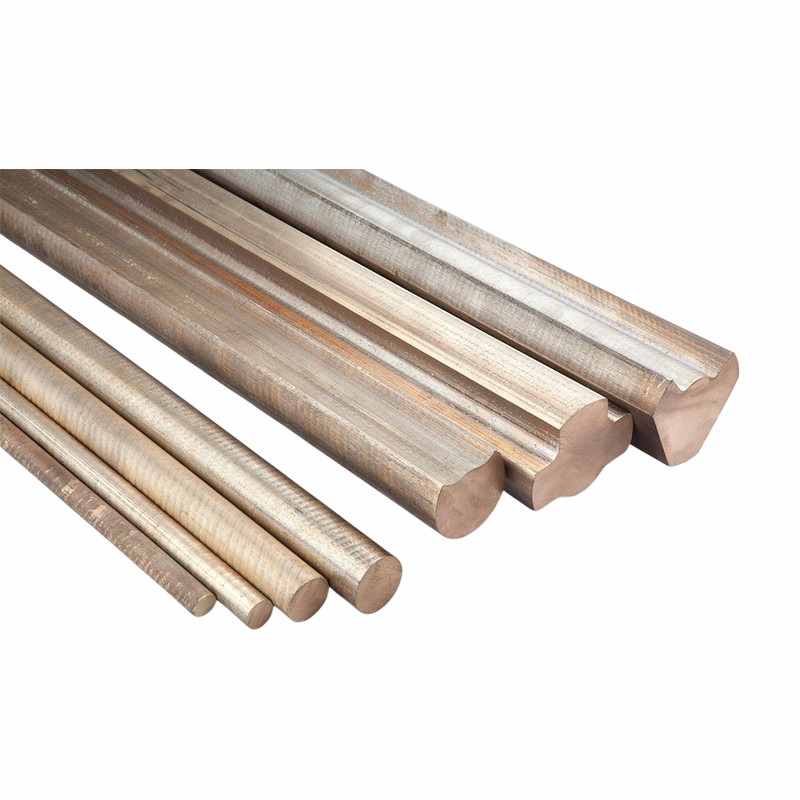
As a supplier of bronze alloys, we offer a wide range of products, including Bronze Square Rod, Bronze Shaped Rod, and Bronze Round Bar. All our products are manufactured in strict compliance with national standards, ensuring the highest level of quality and performance.
We use advanced testing equipment and techniques to verify the chemical composition and mechanical properties of our bronze alloys. Our quality control team conducts thorough inspections at every stage of the manufacturing process to ensure that our products meet or exceed the national standards. By doing so, we can provide our customers with reliable and durable bronze alloys that are suitable for a variety of applications.
Conclusion
National standards for bronze alloys are essential for ensuring the quality, safety, and performance of these materials. By adhering to these standards, we can produce bronze alloys that meet the diverse needs of our customers, from structural applications to decorative purposes. As a supplier, we are committed to providing high-quality bronze alloys that comply with national standards, and we continuously strive to improve our manufacturing processes and product offerings.
If you are interested in purchasing bronze alloys for your project, we invite you to contact us for more information. Our team of experts is ready to assist you in selecting the right bronze alloy for your specific requirements and to provide you with competitive pricing and excellent customer service. Let's work together to bring your projects to life with our high-quality bronze alloys.
References
- Metals Handbook: Properties and Selection: Nonferrous Alloys and Pure Metals, Volume 2, ASM International
- ASTM International Standards for Copper and Copper Alloys
- ISO Standards for Metallic Materials


