


Hey there! As a supplier of bronze square rods, I often get asked about the inspection standards for these products. In this blog post, I'll break down the key inspection criteria that we follow to ensure the quality of our bronze square rods.
1. Dimensional Accuracy
One of the most basic yet crucial inspection standards is dimensional accuracy. The size of a bronze square rod matters a great deal, as it needs to fit precisely into the intended applications. We measure the length, width, and thickness of each rod using high - precision measuring tools like calipers and micrometers.
The tolerance for dimensional accuracy can vary depending on the customer's requirements. For general industrial use, we usually aim for a tolerance of around ±0.05mm to ±0.1mm. However, for more specialized applications like in the aerospace or electronics industries, the tolerance can be as tight as ±0.01mm. If the dimensions deviate from the specified tolerance, the rod may not fit properly, which can lead to performance issues in the final product.
2. Surface Quality
The surface of a bronze square rod should be smooth and free from defects. We visually inspect each rod for scratches, cracks, pits, and other surface irregularities. Scratches can not only affect the appearance of the rod but also potentially compromise its structural integrity, especially in applications where the rod is subject to high stress.
Cracks are even more serious. They can propagate under stress, leading to premature failure of the rod. Pits, on the other hand, can act as stress concentrators, increasing the risk of fatigue failure. To ensure a high - quality surface finish, we use various finishing processes, such as polishing and grinding, and then conduct a thorough visual inspection under proper lighting conditions.
3. Chemical Composition
The chemical composition of bronze is a critical factor in determining its properties. Bronze is an alloy primarily composed of copper and tin, but it can also contain other elements like zinc, lead, and phosphorus. The exact composition can significantly affect the rod's hardness, strength, corrosion resistance, and machinability.
We use advanced analytical techniques, such as spectroscopy, to analyze the chemical composition of our bronze square rods. This allows us to ensure that the composition meets the specified standards. For example, a common bronze alloy used in many applications is C51000, which typically contains around 95% copper and 5% tin. Deviations from the standard composition can lead to inconsistent performance, so it's essential to keep a close eye on this aspect.
4. Mechanical Properties
Mechanical properties, such as hardness, strength, and ductility, are also important inspection criteria. Hardness is a measure of the rod's resistance to indentation and wear. We use hardness testing methods like the Brinell or Rockwell hardness tests to determine the hardness of our bronze square rods.
Strength refers to the rod's ability to withstand stress without breaking. Tensile strength, yield strength, and shear strength are some of the key strength parameters that we test. Ductility, on the other hand, is the ability of the rod to deform under stress without fracturing. We conduct tensile tests to measure these mechanical properties accurately. These tests are usually carried out in a controlled laboratory environment using specialized testing equipment.
5. Coating and Plating (if applicable)
In some cases, our bronze square rods may require a coating or plating for additional protection or aesthetic purposes. If a coating or plating is applied, we inspect its adhesion, thickness, and uniformity. Poor adhesion can cause the coating or plating to peel off over time, exposing the underlying bronze to corrosion.
The thickness of the coating or plating is also important, as it needs to be within a certain range to provide the desired level of protection. We use techniques like X - ray fluorescence (XRF) to measure the coating thickness accurately. Additionally, we visually inspect the surface to ensure that the coating or plating is uniform and free from bubbles, cracks, or other defects.

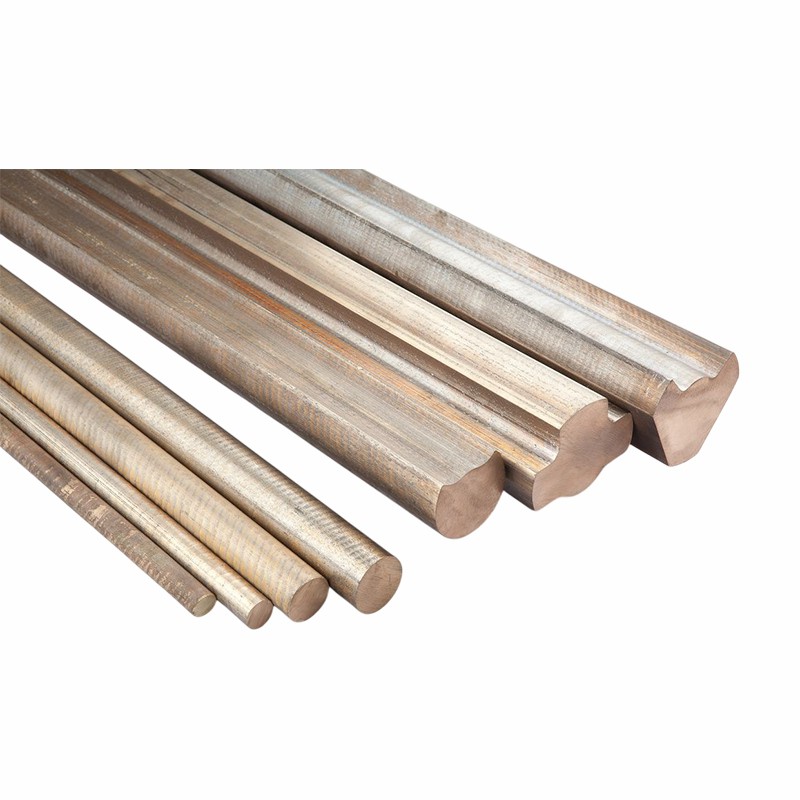
Now, if you're in the market for high - quality bronze square rods, you might also be interested in our other products such as Bronze Round Bar, Bronze Shaped Rod, and Bronze Round Tube.
If you have any questions or are looking to purchase bronze square rods, don't hesitate to get in touch for a detailed discussion and a quote. We're always ready to assist you with your bronze product needs.
References
- "Metals Handbook: Properties and Selection: Nonferrous Alloys and Pure Metals", ASM International
- "Copper and Copper Alloys: A Practical Guide", Elsevier


