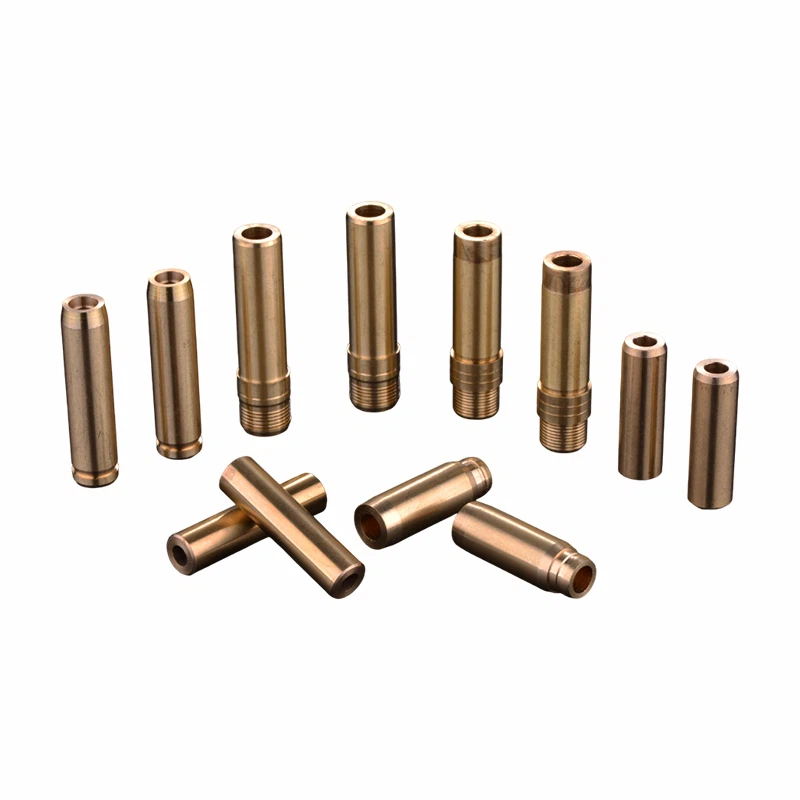
As a dedicated supplier of bronze alloys, I've witnessed firsthand the diverse and remarkable formability properties that make these materials a staple in numerous industries. Bronze, an alloy primarily composed of copper and tin, with possible additions of other elements like aluminum, manganese, nickel, or zinc, offers a unique combination of characteristics that facilitate its transformation into various shapes and forms.
Understanding Formability in Bronze Alloys
Formability refers to the ability of a material to undergo plastic deformation without cracking or failing. In the context of bronze alloys, this encompasses processes such as casting, forging, rolling, extrusion, and machining. Each of these processes exploits different aspects of bronze's formability properties, enabling the creation of a wide range of products, from intricate art pieces to high - performance industrial components.
Casting
Casting is one of the oldest and most common methods for shaping bronze alloys. The excellent fluidity of molten bronze is a key factor in its casting formability. When heated to its melting point, bronze can flow easily into complex molds, capturing fine details with high precision. This property makes it ideal for creating sculptures, jewelry, and decorative items.
The relatively low melting point of bronze compared to some other metals also contributes to its casting efficiency. It requires less energy to melt, reducing production costs. Additionally, bronze has a good shrinkage rate during solidification. This means that the final cast product closely matches the dimensions of the mold, minimizing the need for extensive post - casting machining.
For example, in the production of artistic sculptures, the ability of bronze to be cast into detailed molds allows artists to bring their creative visions to life. The smooth surface finish achievable through casting also enhances the aesthetic appeal of the final product.
Forging
Forging involves shaping bronze alloys by applying compressive forces, typically through hammering or pressing. Bronze alloys exhibit good forgeability due to their ductility. Ductility is the ability of a material to be stretched or deformed without breaking. When heated to the appropriate forging temperature, bronze can be shaped into various forms, such as bars, rods, and structural components.
The grain structure of bronze can be refined during forging, which improves its mechanical properties. This results in a stronger and more durable final product. For instance, in the manufacturing of mechanical parts for heavy machinery, forged bronze components can withstand high stress and wear, ensuring long - term performance.
Rolling
Rolling is a process used to reduce the thickness of bronze alloys or to produce sheets and plates. Bronze alloys are well - suited for rolling because of their malleability. Malleability is the ability of a material to be flattened or shaped under pressure. During rolling, the bronze is passed through a series of rollers, which gradually reduce its thickness and increase its length.
The uniform grain structure that can be achieved through rolling enhances the mechanical properties of the bronze sheets and plates. These rolled products are widely used in industries such as architecture, where they can be used for roofing, cladding, and decorative elements. The smooth surface finish of rolled bronze also makes it suitable for applications where appearance is important.
Extrusion
Extrusion is a process where bronze alloys are forced through a die to create products with a constant cross - sectional shape. Bronze alloys have good extrusion formability because they can flow through the die without significant cracking or tearing. This process is commonly used to produce Bronze Square Rod, Bronze Shaped Tube, and Bronze Round Bar.
The ability to control the extrusion process allows for the production of custom - shaped profiles with precise dimensions. This is particularly useful in industries such as automotive and aerospace, where specific shapes and sizes are required for components.
Machining
Machining is the process of removing material from a bronze alloy to create a desired shape. Bronze alloys are known for their good machinability. They can be easily cut, drilled, and milled using conventional machining tools. The chips produced during machining are usually small and manageable, which reduces the risk of clogging the cutting tools.
The relatively low hardness of bronze compared to some other metals also means that less cutting force is required, extending the life of the machining tools. This results in cost - effective machining operations. For example, in the production of small - scale precision parts, such as those used in electronics, the good machinability of bronze allows for the creation of intricate designs with high accuracy.
Factors Affecting Formability
Several factors can influence the formability of bronze alloys. The composition of the alloy plays a crucial role. Different alloying elements can alter the mechanical and physical properties of bronze, affecting its formability in various processes. For example, the addition of aluminum can increase the strength and hardness of bronze, but it may also reduce its ductility to some extent.
The temperature at which the forming process takes place is also important. Each bronze alloy has an optimal temperature range for different forming processes. Heating the alloy to the right temperature ensures that it is in a state where it can be easily deformed without cracking.
The initial microstructure of the bronze alloy also matters. A fine - grained microstructure generally provides better formability compared to a coarse - grained one. Heat treatment processes can be used to modify the microstructure and improve formability.


Applications Based on Formability
The formability properties of bronze alloys make them suitable for a wide range of applications. In the construction industry, bronze is used for architectural elements such as door handles, window frames, and decorative facades. Its ability to be cast, rolled, and machined allows for the creation of custom - designed components that enhance the aesthetic appeal of buildings.
In the marine industry, bronze alloys are used for ship propellers, valves, and fittings. The corrosion resistance of bronze, combined with its formability, makes it an ideal material for these applications. Components can be forged or cast into the required shapes to ensure optimal performance in harsh marine environments.
In the electrical industry, bronze is used for electrical connectors and switches. The good electrical conductivity of bronze, along with its machinability, allows for the production of precise components that ensure reliable electrical connections.
Conclusion
In conclusion, the formability properties of bronze alloys are a key factor in their widespread use across multiple industries. Whether it's the ability to be cast into detailed sculptures, forged into strong mechanical parts, rolled into sheets for architectural applications, extruded into custom profiles, or machined into precision components, bronze offers a versatile solution.
If you're in need of high - quality bronze alloys for your specific applications, I encourage you to reach out to discuss your requirements. Our team of experts is ready to assist you in selecting the right bronze alloy and providing solutions tailored to your needs. Whether you're working on a small - scale art project or a large - scale industrial production, we can offer the best products and support.
References
- ASM Handbook Volume 2: Properties and Selection: Nonferrous Alloys and Special - Purpose Materials.
- Metals Handbook Desk Edition, 3rd Edition.
- Copper and Copper Alloys: Properties, Processing, and Applications by John R. Davis.