


Valve guide pipes play a crucial role in the automotive and machinery industries, serving as a guide for the valve stem and ensuring proper valve operation. As a leading Valve Guide Pipe supplier, we understand the importance of providing high - quality, diverse valve guide pipes to meet the various needs of our customers. In this blog, we will explore the different types of valve guide pipes, their characteristics, and applications.
1. Cast Iron Valve Guide Pipes
Cast iron valve guide pipes are one of the most commonly used types in the industry. They are made from cast iron, a material known for its excellent wear resistance and high - temperature stability.
The manufacturing process of cast iron valve guide pipes involves melting iron and adding specific alloying elements to improve its properties. The molten metal is then poured into a mold to form the shape of the valve guide pipe.
One of the main advantages of cast iron valve guide pipes is their cost - effectiveness. They are relatively inexpensive to produce, making them a popular choice for many automotive manufacturers. Additionally, they have good thermal conductivity, which helps in dissipating heat generated during valve operation.
However, cast iron valve guide pipes also have some limitations. They are relatively heavy, which can increase the overall weight of the engine. Moreover, they may be prone to corrosion if not properly maintained.
Cast iron valve guide pipes are widely used in general - purpose engines, such as those found in passenger cars and light - duty trucks. They can withstand normal operating conditions and provide reliable performance over a long period.
2. Bronze Valve Guide Pipes
Bronze valve guide pipes are another popular option. Bronze is an alloy primarily composed of copper and tin, with other elements such as zinc and lead sometimes added to enhance its properties.
The production of bronze valve guide pipes involves melting the alloy components together and then using various forming techniques, such as casting or machining.
Bronze valve guide pipes offer several benefits. They have excellent lubricity, which reduces friction between the valve stem and the guide pipe. This not only improves the valve's operating efficiency but also extends the service life of both the valve and the guide pipe. Additionally, bronze is highly resistant to corrosion, making it suitable for use in harsh environments.
On the downside, bronze valve guide pipes are generally more expensive than cast iron ones. They also have relatively lower strength compared to some other materials, which may limit their use in high - stress applications.
Bronze valve guide pipes are often used in applications where smooth valve operation and corrosion resistance are critical, such as in marine engines and some high - performance automotive engines. You can learn more about our high - quality bronze - based Valve Guide Pipe on our website.
3. Powder Metallurgy Valve Guide Pipes
Powder metallurgy is a modern manufacturing process used to produce valve guide pipes. This method involves compacting metal powders into the desired shape and then sintering them at high temperatures to form a solid component.

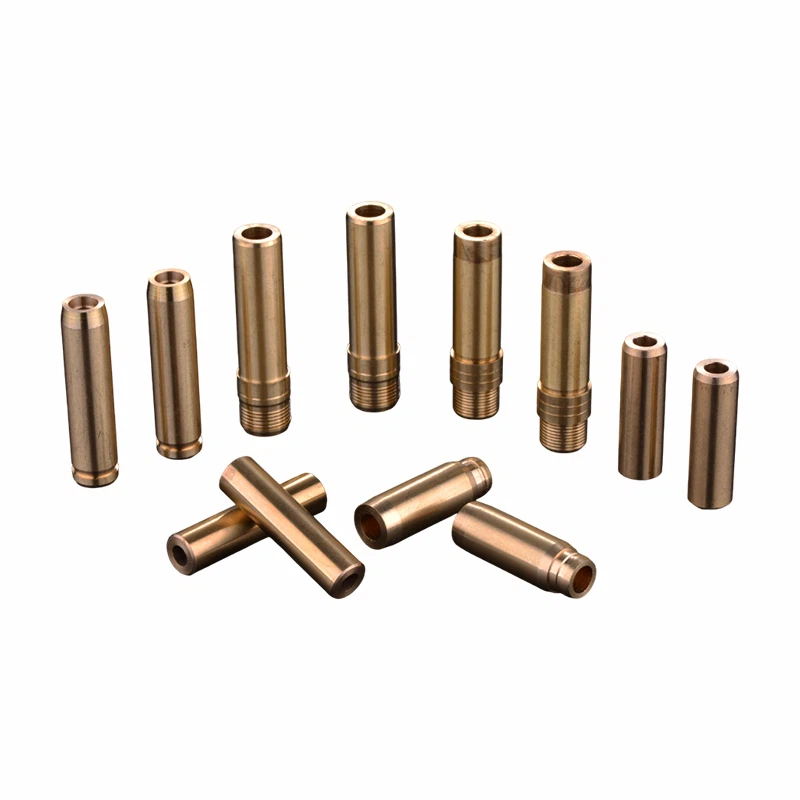
Powder metallurgy valve guide pipes have several unique features. They can be manufactured with high precision, ensuring accurate dimensions and a good fit with the valve stem. The material composition can also be precisely controlled, allowing for the optimization of properties such as hardness, strength, and porosity.
One of the significant advantages of powder metallurgy valve guide pipes is their ability to incorporate special additives or reinforcements. For example, they can be infused with graphite particles to improve lubrication, or with ceramic particles to enhance wear resistance.
However, the powder metallurgy process is relatively complex and requires specialized equipment, which can increase the production cost. Also, the density of powder metallurgy parts may be lower than that of fully dense materials, which could potentially affect their performance in some high - load applications.
These valve guide pipes are commonly used in high - performance engines and applications where precise control of material properties is required.
4. Copper - Alloy Valve Guide Pipes
Copper - alloy valve guide pipes are made from alloys based on copper, with addition of elements such as aluminum, nickel, and silicon. These alloys offer a combination of excellent thermal conductivity, high strength, and good corrosion resistance.
The manufacturing of copper - alloy valve guide pipes typically involves melting the alloy, casting it into a billet, and then machining it to the final shape.
The high thermal conductivity of copper - alloy valve guide pipes helps in quickly transferring heat away from the valve, preventing overheating and ensuring stable valve operation. They also have good mechanical properties, which allow them to withstand high - pressure and high - temperature conditions.
One drawback of copper - alloy valve guide pipes is their relatively high cost. The raw materials and the manufacturing process can make them more expensive compared to some other types of valve guide pipes.
Copper - alloy valve guide pipes are often used in high - end automotive engines, racing engines, and industrial machinery where performance and reliability are of utmost importance. We also offer related Cooper Bushing which shares some similarities with valve guide pipes in terms of material and application.
5. Ceramic Valve Guide Pipes
Ceramic valve guide pipes are a relatively new and advanced type. Ceramics are known for their high hardness, excellent wear resistance, and low friction coefficient.
The production of ceramic valve guide pipes involves shaping ceramic powders into the desired form and then sintering them at extremely high temperatures.
Ceramic valve guide pipes offer outstanding performance in terms of wear and heat resistance. They can operate at very high temperatures without significant degradation, making them suitable for high - performance and high - temperature applications. Their low friction coefficient also reduces energy consumption and improves the overall efficiency of the valve system.
However, ceramics are brittle materials, which means they are more likely to crack or break under impact or sudden stress. They are also more difficult to machine and manufacture, resulting in higher costs.
Ceramic valve guide pipes are mainly used in high - end racing engines and some specialized industrial applications where extreme performance is required.
6. Composite Valve Guide Pipes
Composite valve guide pipes are made by combining different materials to take advantage of their respective properties. For example, a composite valve guide pipe may consist of a metal outer layer for strength and a polymer inner layer for lubrication.
The manufacturing of composite valve guide pipes involves complex bonding and assembly processes. The different materials need to be carefully selected and combined to ensure good compatibility and performance.
Composite valve guide pipes offer a unique combination of properties. They can provide high strength, good lubrication, and corrosion resistance in a single component. They can also be designed to meet specific application requirements by adjusting the material composition and structure.
The main challenge with composite valve guide pipes is the potential for delamination between the different layers if the bonding is not strong enough. Also, the manufacturing process is more complicated and may require more quality control measures.
These valve guide pipes are used in some specialized applications where a combination of different properties is needed, such as in some aerospace engines and high - tech automotive applications.
Conclusion
In conclusion, there are various types of valve guide pipes available, each with its own set of characteristics, advantages, and limitations. As a Valve Guide Pipe supplier, we are committed to providing our customers with a wide range of high - quality valve guide pipes to meet their specific needs. Whether it is for a standard automotive engine or a high - performance racing application, we have the right solution for you.
If you are in the market for valve guide pipes or related products like Compressor Swash Plate, we invite you to contact us for procurement and further discussion. Our team of experts is ready to assist you in selecting the most suitable valve guide pipes for your application.
References
- Automotive Engine Design Handbook, various authors
- Materials Science and Engineering for Automotive Applications, published by a leading academic press


