


Hey there! As a bronze alloys supplier, I often get asked about the destructive testing methods for bronze alloys. Destructive testing is a crucial part of ensuring the quality and performance of bronze products. It helps us understand the material's properties and make sure it meets the required standards. So, let's dive into the world of destructive testing for bronze alloys.
Tensile Testing
Tensile testing is one of the most common destructive testing methods. In this test, we take a small sample of the bronze alloy and pull it apart until it breaks. We use a machine called a tensile testing machine, which applies a gradually increasing force to the sample. During the test, we measure the force applied and the corresponding elongation of the sample.
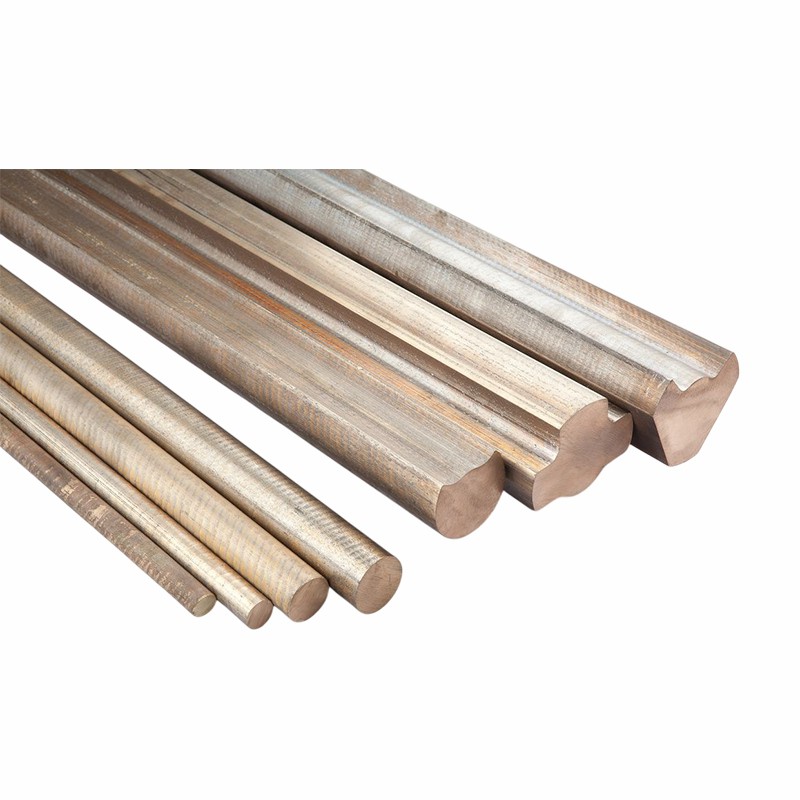
This test gives us important information about the bronze alloy's mechanical properties, such as its ultimate tensile strength (the maximum stress the material can withstand before breaking), yield strength (the stress at which the material starts to deform permanently), and elongation (how much the material stretches before breaking). These properties are vital for applications where the bronze alloy will be subjected to pulling or stretching forces, like in Bronze Shaped Rod used in structural components.
Hardness Testing
Hardness testing is another essential destructive testing method. It measures the resistance of the bronze alloy to indentation or scratching. There are several hardness testing methods, but the most common ones for bronze alloys are the Brinell, Rockwell, and Vickers tests.

The Brinell test uses a hardened steel or tungsten carbide ball indenter. A known load is applied to the indenter, which is pressed into the surface of the bronze sample. The size of the indentation left on the surface is measured, and the hardness value is calculated based on the load and the indentation diameter.
The Rockwell test is quicker and more convenient. It uses either a steel ball or a diamond cone indenter. The indenter is first applied with a minor load, and then a major load is added. The difference in indentation depth between the minor and major loads is used to determine the hardness value.
The Vickers test uses a diamond pyramid indenter. Similar to the Brinell test, a known load is applied, and the diagonal length of the resulting indentation is measured to calculate the hardness. Hardness testing helps us assess the wear resistance and machinability of the bronze alloy, which is important for products like Bronze Shaped Tube, which may be exposed to friction and abrasion.
Impact Testing
Impact testing is used to evaluate the toughness of the bronze alloy. In this test, a pendulum hammer is used to strike a notched sample of the bronze alloy. The energy absorbed by the sample during the impact is measured. This gives us an idea of how well the material can withstand sudden shocks and impacts without fracturing.
There are two main types of impact tests: the Charpy test and the Izod test. In the Charpy test, the sample is supported at both ends like a beam, and the hammer strikes the sample in the middle. In the Izod test, the sample is clamped at one end, and the hammer strikes the free end. Impact testing is crucial for applications where the bronze alloy may be exposed to dynamic loading, such as in Bronze Round Bar used in machinery parts that experience sudden impacts.
Metallographic Testing
Metallographic testing involves examining the microstructure of the bronze alloy. First, a small sample is cut from the bronze material and prepared by grinding, polishing, and etching. Then, the sample is examined under a microscope.
By analyzing the microstructure, we can identify the phases present in the bronze alloy, their distribution, and any defects or inclusions. This information helps us understand the heat treatment history of the material, its mechanical properties, and its susceptibility to corrosion. For example, if we find large amounts of certain phases or inclusions, it could indicate problems with the manufacturing process or affect the performance of the final product.
Chemical Analysis by Destructive Means
Sometimes, we need to determine the exact chemical composition of the bronze alloy. One way to do this destructively is by using techniques like wet chemical analysis or spark emission spectroscopy.
In wet chemical analysis, a sample of the bronze alloy is dissolved in appropriate chemicals, and then various analytical methods are used to measure the concentrations of different elements. This method is relatively accurate but can be time - consuming and requires skilled technicians.
Spark emission spectroscopy involves creating an electric spark on the surface of the bronze sample. The high - energy spark vaporizes a small amount of the material, and the emitted light is analyzed to determine the elemental composition. This method is faster and can analyze multiple elements simultaneously. Knowing the chemical composition is essential to ensure the quality and compliance of the bronze alloy with relevant standards.
Fracture Toughness Testing
Fracture toughness testing is carried out to measure the ability of the bronze alloy to resist crack propagation. A sample with a pre - existing crack is loaded in a controlled way, and the stress at which the crack starts to grow and the rate of crack growth are measured. This is important for applications where the bronze alloy may contain small cracks or flaws, and we need to ensure that they do not lead to catastrophic failure. Fracture toughness testing helps us design safer and more reliable products using bronze alloys.
Fatigue Testing
Fatigue testing is used to evaluate how the bronze alloy performs under repeated loading. A sample is subjected to cyclic stress, and the number of cycles it can withstand before failure is recorded. This is crucial for applications where the bronze alloy will experience repeated loading, such as in engine components or springs. Understanding the fatigue properties of the bronze alloy helps us predict its service life and prevent premature failure.
Now, if you're in the market for high - quality bronze alloys, we've got you covered. Our team of experts is ready to assist you in choosing the right bronze alloy for your specific application. Whether you need Bronze Shaped Rod, Bronze Shaped Tube, or Bronze Round Bar, we can provide you with products that have undergone rigorous testing to ensure their quality. So, don't hesitate to get in touch with us if you're interested in discussing your procurement needs. We're here to offer you the best bronze alloy solutions.
References
- ASTM International standards on metal testing
- ASM Handbook Volume 8: Mechanical Testing and Evaluation
- Lawrence, J. F. (2007). "Metallography: Principles and Practices". Springer Science + Business Media.


