


Improving the quality of copper bushings is a crucial aspect for any supplier in the industry. As a copper bushing supplier, I understand the significance of delivering high - quality products to meet the diverse needs of our customers. In this blog, I will share some effective strategies and techniques that can be employed to enhance the quality of copper bushings.
Material Selection
The first step in improving the quality of copper bushings is to select the right materials. Copper alloys come in a wide range of compositions, each with its own set of properties. For instance, bronze, a common copper alloy, offers excellent wear resistance, high strength, and good corrosion resistance. When choosing a copper alloy for bushings, factors such as the application environment, load requirements, and operating conditions need to be considered.
If the bushing is going to be used in a high - load and high - speed application, a copper alloy with high strength and hardness, such as phosphor bronze, might be a suitable choice. On the other hand, for applications where corrosion resistance is a primary concern, a copper - nickel alloy could be more appropriate. By carefully selecting the material, we can ensure that the copper bushing has the necessary properties to perform well in its intended application.
Manufacturing Processes
The manufacturing process plays a vital role in determining the quality of copper bushings. Precision machining is one of the key processes in producing high - quality bushings. Computer Numerical Control (CNC) machining allows for high accuracy and repeatability, ensuring that the bushings are produced to the exact specifications. This reduces the chances of dimensional errors and improves the overall fit and performance of the bushing.
Heat treatment is another important process. It can enhance the mechanical properties of the copper alloy, such as hardness, strength, and toughness. For example, annealing can relieve internal stresses in the bushing, while quenching and tempering can increase its hardness. By carefully controlling the heat treatment parameters, we can optimize the properties of the copper bushing.
In addition, surface finishing is crucial for improving the quality of copper bushings. A smooth surface finish reduces friction and wear, which in turn extends the service life of the bushing. Processes such as grinding, polishing, and plating can be used to achieve a high - quality surface finish. For example, a nickel - plated surface can improve the corrosion resistance of the bushing, while a PTFE coating can reduce friction.
Quality Control
Implementing a rigorous quality control system is essential for ensuring the quality of copper bushings. This includes inspecting the raw materials before production, monitoring the manufacturing process, and conducting final inspections on the finished products.
Raw material inspection involves checking the chemical composition, physical properties, and dimensions of the copper alloy. This ensures that the material meets the required standards. During the manufacturing process, in - process inspections are carried out to detect any potential issues early on. This can include checking the dimensions, surface finish, and hardness of the bushing at various stages of production.
Final inspections are conducted to ensure that the finished copper bushings meet all the specifications. This can involve using various testing methods, such as dimensional measurement, hardness testing, and non - destructive testing. For example, ultrasonic testing can be used to detect internal defects in the bushing, while X - ray inspection can be used to check for any hidden flaws.
Research and Development
Investing in research and development is crucial for continuously improving the quality of copper bushings. By staying up - to - date with the latest technological advancements and industry trends, we can develop new materials and manufacturing processes that can enhance the performance of our products.
For example, researchers are constantly exploring new copper alloys with improved properties, such as better wear resistance and higher strength. By collaborating with research institutions and universities, we can access the latest research findings and incorporate them into our production processes.
In addition, we can also invest in developing new manufacturing techniques, such as additive manufacturing. Additive manufacturing, also known as 3D printing, allows for the production of complex geometries with high precision. This can open up new possibilities for designing and manufacturing copper bushings with improved performance.
Customer Feedback
Listening to customer feedback is an important part of improving the quality of copper bushings. Customers can provide valuable insights into the performance of our products in real - world applications. By collecting and analyzing customer feedback, we can identify areas for improvement and make necessary adjustments to our products and processes.
For example, if customers report issues with the wear resistance of a particular type of copper bushing, we can investigate the root cause and take steps to improve the material or manufacturing process. By addressing customer concerns promptly, we can enhance customer satisfaction and build long - term relationships.
Product Range and Related Links
As a copper bushing supplier, we also offer a range of related products. For those interested in other copper - alloy products for hydraulic pump parts, you can check out our Copper Shell Bearing and Plunger Pump Ball Retainer. Of course, our main product, Copper Bushing, is designed with high - quality standards in mind.
Conclusion
Improving the quality of copper bushings requires a comprehensive approach that includes material selection, manufacturing processes, quality control, research and development, and customer feedback. By implementing these strategies, we can ensure that our copper bushings meet the highest standards of quality and performance.
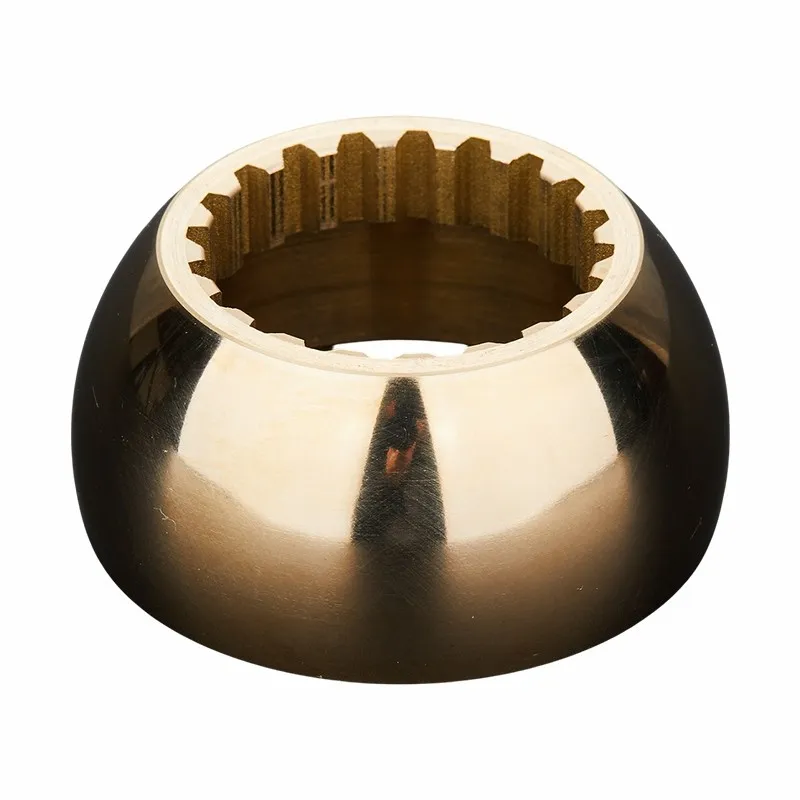

If you are interested in our copper bushings or other related products, we welcome you to contact us for procurement and negotiation. We are committed to providing you with the best - quality products and services.
References
- ASM Handbook Committee. (2001). ASM Handbook, Volume 4: Heat Treating. ASM International.
- Kalpakjian, S., & Schmid, S. R. (2010). Manufacturing Engineering and Technology. Pearson Prentice Hall.
- Metals Handbook Committee. (1990). Metals Handbook, Volume 2: Properties and Selection: Nonferrous Alloys and Pure Metals. ASM International.


