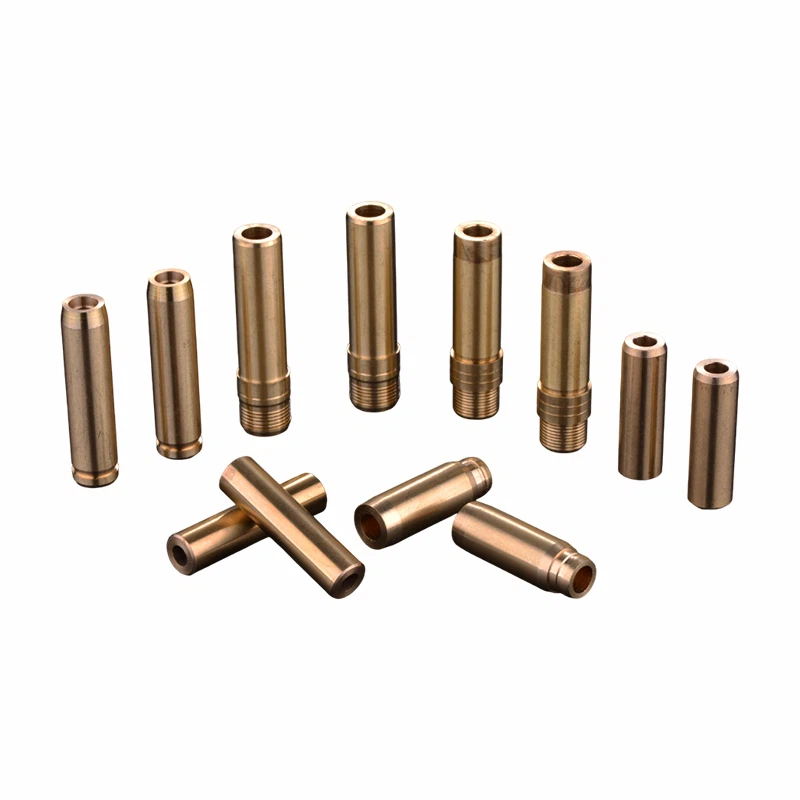
Hey there! I'm a supplier of copper bushings, and today I wanna chat about how to improve the performance of these little but crucial components. Copper bushings are widely used in various industries due to their excellent properties, but there are always ways to make them work even better.
Understanding Copper Bushings
First off, let's quickly go over what copper bushings are. They're essentially cylindrical sleeves made of copper or copper alloys. These bushings are used to reduce friction, support shafts, and prevent wear and tear in machinery. They come in different shapes, sizes, and compositions, depending on the specific application.
Material Selection
One of the most important factors in improving the performance of copper bushings is choosing the right material. Different copper alloys have different properties, so it's crucial to pick the one that suits your needs. For example, bronze, which is an alloy of copper and tin, is known for its high strength and wear resistance. It's a great choice for applications where the bushing will be under heavy load or high stress.
Another popular option is brass, an alloy of copper and zinc. Brass is more corrosion - resistant than some other copper alloys and has good machinability. This makes it ideal for applications where the bushing needs to be easily shaped or where it will be exposed to moisture or chemicals.
When selecting the material, you also need to consider the operating environment. If the bushing will be used in a high - temperature environment, you might want to choose an alloy that has good heat resistance. Some special copper alloys are designed to maintain their mechanical properties even at elevated temperatures.
Surface Treatment
Surface treatment can significantly enhance the performance of copper bushings. One common surface treatment is plating. For instance, chrome plating can increase the hardness and wear resistance of the bushing. It creates a smooth and durable surface that reduces friction and extends the service life of the bushing.
Another option is nitriding. Nitriding is a heat - treatment process that diffuses nitrogen into the surface of the copper bushing. This forms a hard nitride layer on the surface, which improves the wear and corrosion resistance. It also enhances the fatigue strength of the bushing, making it more suitable for applications with cyclic loading.
Lubrication
Proper lubrication is key to improving the performance of copper bushings. Lubricants reduce friction between the bushing and the shaft, which in turn reduces wear and heat generation. There are different types of lubricants available, such as oil - based and grease - based lubricants.
Oil - based lubricants are good for applications where high - speed operation is required. They can provide continuous lubrication and can carry away heat effectively. Grease - based lubricants, on the other hand, are more suitable for applications where the bushing is in a low - speed or intermittent - motion environment. Grease stays in place better than oil and can provide long - term lubrication.
It's important to choose the right lubricant based on the operating conditions. For example, if the bushing is used in a dusty environment, you might want to choose a lubricant with good sealing properties to prevent dust from entering and causing abrasion.


Design Optimization
The design of the copper bushing also plays a vital role in its performance. The dimensions of the bushing, such as the inner diameter, outer diameter, and length, need to be carefully selected to ensure a proper fit with the shaft and the housing.
A well - designed bushing should have the right clearance between the shaft and the bushing. If the clearance is too small, it can cause excessive friction and heat generation, which may lead to premature wear. On the other hand, if the clearance is too large, the bushing may not provide adequate support to the shaft, resulting in misalignment and vibration.
In some applications, the shape of the bushing can also be optimized. For example, a flanged bushing can provide additional support and prevent axial movement of the shaft. Some bushings are designed with grooves or holes to improve lubricant distribution, which helps to reduce friction and wear.
Quality Control
As a copper bushing supplier, I know how important quality control is. During the manufacturing process, strict quality control measures should be implemented to ensure that each bushing meets the required standards.
We use advanced inspection techniques, such as dimensional inspection using precision measuring tools like calipers and micrometers. This ensures that the bushings have the correct dimensions. We also conduct hardness testing to make sure that the material has the right mechanical properties.
Non - destructive testing methods, such as ultrasonic testing and magnetic particle testing, can be used to detect internal defects in the bushings. By identifying and eliminating defective products, we can ensure that only high - quality bushings are delivered to our customers.
Applications and Performance in Different Industries
Copper bushings are used in a wide range of industries. In the Rail Traffic industry, they are used in various components of trains and railway equipment. The performance of these bushings is crucial for the safe and efficient operation of the trains. High - quality copper bushings with good wear and fatigue resistance can withstand the heavy loads and vibrations associated with rail traffic.
In the hydraulic pump industry, Valve Plate and Copper Shell Bearing often use copper bushings. These bushings need to have excellent sealing properties and low friction to ensure the proper functioning of the hydraulic system. By improving the performance of the copper bushings, the overall efficiency and reliability of the hydraulic pump can be enhanced.
Conclusion
Improving the performance of copper bushings involves a combination of factors, including material selection, surface treatment, lubrication, design optimization, and quality control. By paying attention to these aspects, we can make copper bushings more durable, efficient, and reliable.
If you're in the market for high - performance copper bushings, I'd love to have a chat with you. Whether you have specific requirements for your application or need advice on choosing the right bushing, I'm here to help. Let's have a discussion and find the best solution for your needs.
References
- ASM Handbook Volume 2: Properties and Selection: Nonferrous Alloys and Special - Purpose Materials.
- Machinery's Handbook, 31st Edition.
- Tribology Handbook: Friction, Wear, Lubrication, and Surface Engineering.