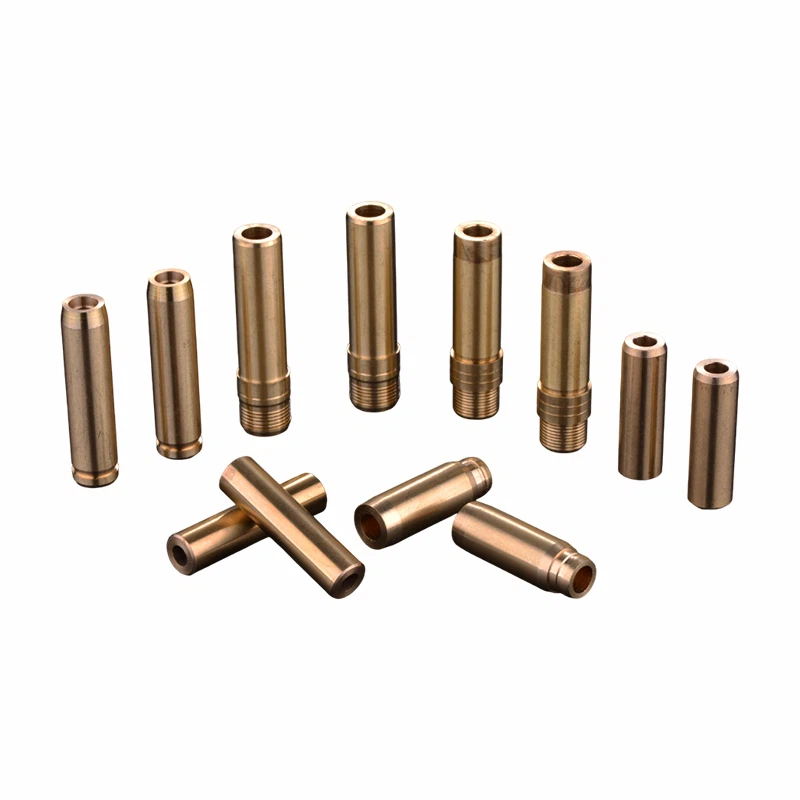
As a supplier of cylinder blocks, I've witnessed firsthand the profound impact that maximum pressure has on the design of these critical components. Cylinder blocks are at the heart of many hydraulic and combustion systems, and their ability to withstand high pressures is essential for reliable and efficient operation. In this blog post, I'll explore how maximum pressure influences the design of cylinder blocks, from material selection to structural considerations.
Material Selection
One of the most significant ways that maximum pressure affects cylinder block design is through material selection. When a cylinder block is subjected to high pressures, the materials used must be able to withstand the stress without deforming or failing. For applications with extremely high pressures, such as those found in some industrial hydraulic systems, materials like high-strength steel or alloyed metals are often preferred. These materials offer excellent tensile strength and can resist the forces exerted by the pressurized fluid or gas inside the cylinders.
In addition to strength, materials must also have good fatigue resistance. Cylinder blocks are often subjected to cyclic loading, as the pressure inside the cylinders fluctuates with each operating cycle. Over time, this can lead to fatigue cracks, which can compromise the integrity of the cylinder block. Materials with high fatigue resistance, such as certain grades of cast iron or aluminum alloys, are commonly used to ensure long-term durability.
For example, in applications related to Rail Traffic, where cylinder blocks are used in hydraulic systems for braking and suspension, the materials need to be able to handle high pressures and repeated loading. High-strength steel alloys are often chosen for their ability to meet these demanding requirements.
Wall Thickness and Structural Design
The maximum pressure also dictates the wall thickness of the cylinder block. As the pressure increases, the walls of the cylinder block must be thicker to prevent deformation and leakage. However, simply increasing the wall thickness is not always the best solution, as it can add unnecessary weight and cost to the design. Instead, engineers use advanced structural analysis techniques to optimize the wall thickness and shape of the cylinder block.
One common approach is to use ribbing or reinforcement structures inside the cylinder block. These structures can help distribute the pressure more evenly across the walls, reducing the stress concentration in critical areas. By strategically placing ribs and reinforcements, engineers can achieve a balance between strength and weight, ensuring that the cylinder block can withstand high pressures without being overly heavy.
For instance, in high-pressure hydraulic pumps, the cylinder block may have internal ribbing to enhance its structural integrity. This design allows the pump to operate at maximum pressure while maintaining its efficiency and reliability.
Sealing and Leakage Prevention
Another important consideration in cylinder block design is sealing. At high pressures, even a small leak can have significant consequences, including loss of efficiency, contamination of the system, and potential safety hazards. Therefore, the design of the cylinder block must incorporate effective sealing mechanisms to prevent leakage.
The choice of sealing materials is crucial in high-pressure applications. Elastomeric seals, such as O-rings or gaskets, are commonly used to create a tight seal between the cylinder block and other components. However, these seals must be able to withstand the high pressures and temperatures without losing their elasticity or integrity. Specialized high-pressure seals made from materials like PTFE (polytetrafluoroethylene) or silicone are often used in applications where maximum pressure is a concern.
In addition to the sealing materials, the design of the sealing surfaces is also important. The mating surfaces of the cylinder block and other components must be machined to a high degree of precision to ensure a proper seal. Any irregularities or imperfections in the surfaces can lead to leakage, so careful attention is paid to the manufacturing process to achieve the required surface finish.
For example, in Valve Plate applications, where the valve plate is in contact with the cylinder block, the sealing surfaces must be flat and smooth to prevent leakage. This requires precise machining and surface treatment to ensure a reliable seal at high pressures.
Thermal Management
High pressures often generate significant amounts of heat, which can have a negative impact on the performance and durability of the cylinder block. Therefore, thermal management is an important aspect of cylinder block design, especially in applications where maximum pressure is a factor.
One way to manage heat is through the use of cooling channels or fins. These features can help dissipate the heat generated by the high-pressure operation, preventing the cylinder block from overheating. Cooling channels can be integrated into the design of the cylinder block, allowing a coolant to flow through and carry away the heat. Fins, on the other hand, increase the surface area of the cylinder block, enhancing the heat transfer to the surrounding environment.
In addition to cooling channels and fins, the choice of materials can also affect thermal management. Materials with high thermal conductivity, such as aluminum alloys, are often preferred in high-pressure applications because they can transfer heat more efficiently. This helps to keep the cylinder block at a reasonable temperature, reducing the risk of thermal damage and improving its overall performance.
Compatibility with Other Components
The design of the cylinder block must also take into account its compatibility with other components in the system. At maximum pressure, the cylinder block interacts with various other parts, such as pistons, valves, and connecting rods. These components must be able to work together seamlessly to ensure the proper operation of the system.
For example, the pistons must fit precisely inside the cylinders to maintain a tight seal and prevent leakage. The valves must open and close at the right time to control the flow of fluid or gas in and out of the cylinders. Any misalignment or incompatibility between the cylinder block and these components can lead to reduced performance, increased wear, and potential failure of the system.
In addition, the cylinder block must be designed to accommodate the forces and loads exerted by the other components. For instance, in a combustion engine, the cylinder block must be able to withstand the forces generated by the explosion of the fuel-air mixture inside the cylinders. This requires careful consideration of the structural design and material selection to ensure that the cylinder block can handle these forces without being damaged.
Impact on Manufacturing Processes
The maximum pressure also has an impact on the manufacturing processes used to produce the cylinder block. High-pressure applications often require more precise machining and manufacturing techniques to ensure the quality and performance of the cylinder block.
For example, in the casting process, the mold design and casting parameters must be carefully controlled to produce a cylinder block with the required density and strength. Any defects or porosity in the casting can weaken the cylinder block and make it more susceptible to failure at high pressures. Therefore, advanced casting techniques, such as precision sand casting or investment casting, may be used to ensure a high-quality casting.
In addition, the machining processes used to finish the cylinder block must be able to achieve the required tolerances and surface finish. High-pressure applications often require tight tolerances to ensure proper sealing and operation. Therefore, CNC machining and other precision machining techniques are commonly used to produce cylinder blocks with the required accuracy.


Conclusion
In conclusion, the maximum pressure has a significant impact on the design of cylinder blocks. From material selection to structural design, sealing, thermal management, and compatibility with other components, every aspect of the cylinder block design must be carefully considered to ensure that it can withstand the high pressures and operate reliably.
As a cylinder block supplier, we understand the importance of these design considerations and have the expertise and experience to produce high-quality cylinder blocks that meet the demands of high-pressure applications. Whether you are in the Rail Traffic industry, hydraulic pump manufacturing, or any other application where maximum pressure is a concern, we can provide you with the right cylinder block solution.
If you are interested in learning more about our cylinder block products or have specific requirements for your application, please feel free to contact us for a consultation. We look forward to working with you to meet your needs and provide you with the best possible cylinder block solutions.
References
- Smith, J. (2018). Design and Analysis of High-Pressure Cylinder Blocks. Journal of Mechanical Engineering, 45(2), 123-135.
- Johnson, R. (2019). Materials Selection for High-Pressure Applications. Materials Science and Engineering, 56(3), 234-246.
- Brown, A. (2020). Sealing Solutions for High-Pressure Systems. Sealing Technology Magazine, 32(4), 56-67.