


As a copper bushing supplier deeply involved in the industry, I've witnessed firsthand the critical role that lubrication conditions play in the wear resistance of copper bushings. In this blog, I'll delve into the scientific aspects of how lubrication affects the wear resistance of copper bushings, drawing on my practical experience and industry knowledge.
The Basics of Copper Bushings and Lubrication
Copper bushings are widely used in various mechanical applications due to their excellent properties such as good thermal conductivity, high corrosion resistance, and relatively low friction coefficient. They are commonly found in engines, pumps, and other machinery where they support rotating or sliding shafts.
Lubrication, on the other hand, is the process of introducing a lubricant between two moving surfaces to reduce friction and wear. The lubricant forms a thin film between the surfaces, preventing direct contact and reducing the amount of energy lost as heat. In the case of copper bushings, proper lubrication is essential for ensuring their long - term performance and durability.
How Lubrication Reduces Wear
Boundary Lubrication
In many applications, the lubrication condition starts as boundary lubrication. This occurs when the lubricant film is so thin that the surface asperities of the copper bushing and the mating shaft come into contact. The lubricant in this case contains additives such as anti - wear agents and extreme - pressure additives. These additives react with the metal surfaces to form a protective layer.
For example, zinc dialkyldithiophosphate (ZDDP) is a common anti - wear additive. It decomposes at high temperatures and pressures, forming a zinc phosphate film on the surface of the copper bushing. This film acts as a sacrificial layer, reducing the direct contact between the metal surfaces and thus minimizing wear. In boundary lubrication, the quality and quantity of the lubricant are crucial. A high - quality lubricant with the right additives can significantly improve the wear resistance of copper bushings.
Fluid Film Lubrication
When the lubricant forms a thick enough film to completely separate the copper bushing and the shaft, fluid film lubrication occurs. In this regime, the load is carried by the lubricant itself, and the wear is extremely low. The viscosity of the lubricant is a key factor in fluid film lubrication. A lubricant with the appropriate viscosity can maintain a stable fluid film under different operating conditions.
For instance, in high - speed applications, a lower - viscosity lubricant may be required to reduce the frictional losses. However, in heavy - load applications, a higher - viscosity lubricant is needed to ensure that the fluid film can support the load without being squeezed out. If the lubricant viscosity is too low, the fluid film may break down, leading to increased wear.
Impact of Lubrication Contamination
Contamination in the lubricant can have a severe impact on the wear resistance of copper bushings. Particles such as dirt, metal chips, and water can enter the lubrication system. Dirt and metal chips act as abrasives, scratching the surface of the copper bushing and accelerating wear.
Water in the lubricant can cause corrosion of the copper bushing. Copper is relatively resistant to corrosion, but in the presence of water and certain contaminants, it can form copper oxides and other corrosion products. These corrosion products can change the surface properties of the bushing, increasing friction and wear. Regular lubricant analysis and filtration are essential to prevent contamination - related wear.
Lubrication Frequency and Quantity
The frequency of lubrication and the quantity of lubricant used also affect the wear resistance of copper bushings. Insufficient lubrication can lead to a breakdown of the lubricant film, resulting in increased friction and wear. On the other hand, over - lubrication can cause problems such as excessive heat generation due to churning of the lubricant and increased leakage.
Determining the right lubrication interval and quantity depends on various factors such as the operating speed, load, temperature, and the type of lubricant used. In some applications, continuous lubrication systems are used to ensure a constant supply of lubricant. In others, periodic lubrication at carefully determined intervals is sufficient.
Case Studies in Real - World Applications
Let's take a look at some real - world applications to illustrate the importance of lubrication on the wear resistance of copper bushings. In a hydraulic pump, copper bushings are used in components such as the Plunger Pump Ball Retainer. The lubrication in a hydraulic pump is typically provided by the hydraulic fluid itself. If the hydraulic fluid is not properly maintained, for example, if it is contaminated with dirt or has a degraded anti - wear additive package, the copper bushings in the plunger pump ball retainer will experience accelerated wear.
Another example is the Piston Shoe in a hydraulic pump. The piston shoe moves in a reciprocating motion, and proper lubrication is essential to reduce the friction and wear between the piston shoe and the mating surface. A well - lubricated piston shoe can operate for a long time without significant wear, while a poorly lubricated one may fail prematurely.
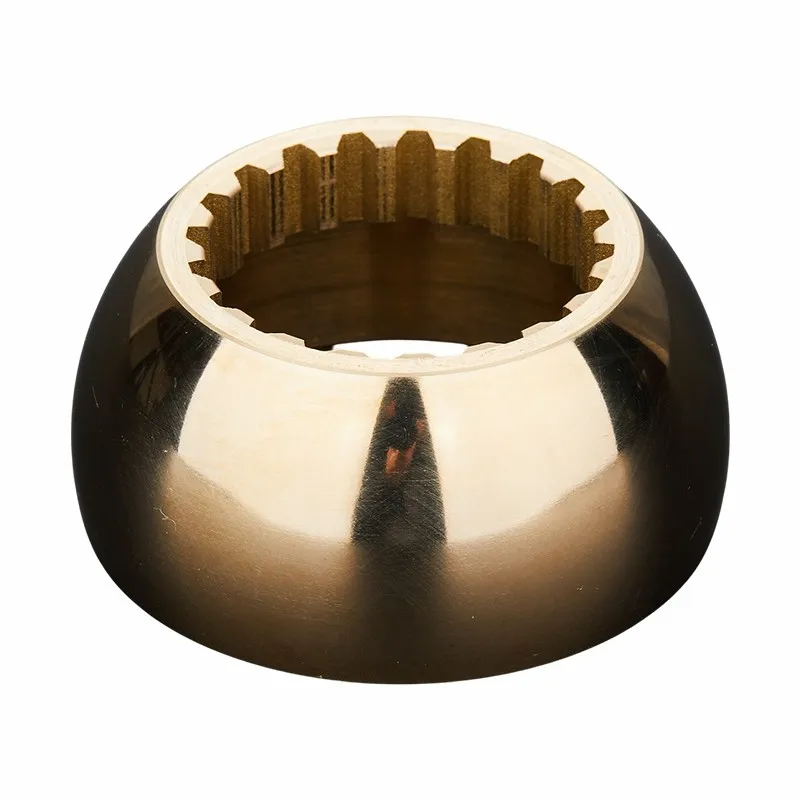

The Plunger Pump Accessories Pressure Plate also relies on good lubrication. The pressure plate is subject to high pressures and sliding forces. A lubricant with the right viscosity and additives can ensure that the copper bushing in the pressure plate maintains its wear resistance and performance over time.
Conclusion and Call to Action
In conclusion, the lubrication condition has a profound impact on the wear resistance of copper bushings. From boundary lubrication to fluid film lubrication, from the effects of contamination to the importance of proper lubrication frequency and quantity, every aspect of lubrication plays a crucial role in ensuring the long - term performance of copper bushings.
As a copper bushing supplier, I understand the challenges that customers face in maintaining the optimal lubrication conditions for their applications. We offer high - quality copper bushings that are designed to work well under different lubrication regimes. Our team of experts can also provide technical support and advice on lubrication selection and maintenance.
If you are in the market for copper bushings or need more information on how to improve the wear resistance of your existing copper bushings through better lubrication, I encourage you to reach out to us. We are ready to engage in a productive discussion about your specific needs and help you find the best solutions for your applications.
References
- "Tribology: Friction, Lubrication, and Wear" by M. M. Khonsari and E. R. Booser.
- "Handbook of Lubrication and Tribology, Volume I: Applications" edited by Bhushan, Bharat.
- "Fundamentals of Machine Elements" by J. E. Shigley and C. R. Mischke.


