


Floating bearings play a crucial role in various mechanical systems, handling both axial and radial loads effectively. As a leading floating bearing supplier, I have witnessed firsthand the importance and complexity of these components. In this blog, I will delve into how floating bearings manage axial and radial loads, exploring the underlying principles and design features that make them so reliable.
Understanding Axial and Radial Loads
Before we discuss how floating bearings handle these loads, it's essential to understand what axial and radial loads are. Axial loads act parallel to the shaft axis, pushing or pulling the shaft in a linear direction. These loads can be caused by various factors, such as the thrust generated by a propeller in a marine application or the forces exerted by a gear in a transmission system.

Radial loads, on the other hand, act perpendicular to the shaft axis. They are typically the result of the weight of rotating components, the forces generated by belts or chains, or the reaction forces from bearings. For example, in an automotive engine, the radial loads on the crankshaft bearings are caused by the reciprocating motion of the pistons and the rotation of the crankshaft.
How Floating Bearings Handle Radial Loads
Floating bearings are designed to support radial loads through a combination of their geometry and the properties of the bearing material. The most common type of floating bearing is the journal bearing, which consists of a cylindrical sleeve that fits around the shaft. The space between the shaft and the bearing is filled with a lubricant, which forms a thin film that separates the two surfaces and reduces friction.
When a radial load is applied to the shaft, the lubricant film is squeezed, creating a pressure distribution that supports the load. The design of the journal bearing ensures that the lubricant film remains stable, even under high loads and speeds. The bearing surface is often machined with grooves or patterns to help distribute the lubricant evenly and prevent the formation of dry spots, which can lead to wear and failure.
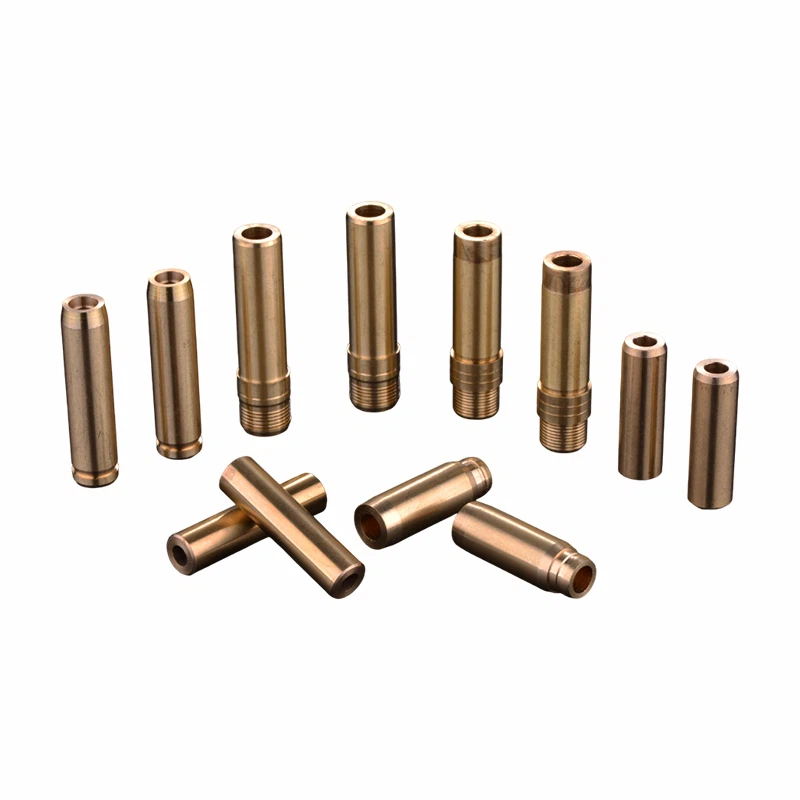
In addition to the lubricant film, the material of the floating bearing also plays a crucial role in handling radial loads. Most floating bearings are made from materials with high strength, good wear resistance, and low friction coefficients. Copper alloys are a popular choice for floating bearings due to their excellent mechanical properties and corrosion resistance. For example, Cooper Bushing is a type of copper alloy bushing that is widely used in automotive and industrial applications for its ability to handle high radial loads.
How Floating Bearings Handle Axial Loads
Handling axial loads is more challenging than handling radial loads because axial loads require the bearing to allow some degree of movement along the shaft axis. Floating bearings are designed to accommodate this movement while still providing support for the axial load.
One of the key features of a floating bearing is its ability to "float" or move axially within its housing. This is typically achieved through a clearance between the bearing and the housing, which allows the bearing to move slightly in response to axial forces. The bearing is also often designed with a spherical or curved surface at one end, which helps to align the bearing with the shaft and allows for some angular misalignment.
In addition to the axial clearance and the spherical surface, some floating bearings are also equipped with thrust washers or other devices to help support the axial load. Thrust washers are flat discs that are placed between the bearing and the housing to provide additional axial support. They are typically made from materials with high wear resistance and low friction coefficients, such as bronze or nylon.
For example, in a transmission system, the floating bearings on the input and output shafts are designed to handle both radial and axial loads. The radial loads are supported by the journal bearing design, while the axial loads are accommodated by the axial clearance and the thrust washers. This allows the shafts to rotate smoothly and transmit power efficiently, even under high loads and speeds.
Design Considerations for Handling Loads
When designing a floating bearing to handle axial and radial loads, several factors need to be considered. These include the magnitude and direction of the loads, the speed of rotation, the operating temperature, and the lubrication conditions.
The magnitude and direction of the loads will determine the size and type of the floating bearing required. For example, in applications with high radial loads, a larger diameter bearing with a thicker wall may be necessary. In applications with high axial loads, a bearing with a larger axial clearance or a more robust thrust washer may be required.
The speed of rotation also affects the design of the floating bearing. At high speeds, the lubricant film needs to be thicker to prevent metal-to-metal contact and reduce friction. This may require a different type of lubricant or a different bearing design, such as a hydrodynamic bearing.
The operating temperature can also have a significant impact on the performance of the floating bearing. High temperatures can cause the lubricant to break down, reduce the strength of the bearing material, and increase the friction between the bearing and the shaft. To prevent these issues, the bearing may need to be designed with a cooling system or a heat-resistant material.
Finally, the lubrication conditions are critical for the proper functioning of the floating bearing. The lubricant helps to reduce friction, prevent wear, and dissipate heat. The type of lubricant used will depend on the operating conditions, such as the temperature, speed, and load. In some cases, a lubricant with additives may be required to improve its performance.
The Importance of Quality Floating Bearings
As a floating bearing supplier, I understand the importance of providing high-quality products. A well-designed and manufactured floating bearing can significantly improve the performance and reliability of a mechanical system, while a low-quality bearing can lead to premature failure and costly repairs.
When choosing a floating bearing, it is essential to select a supplier with a proven track record of quality and reliability. Look for a supplier that uses high-quality materials, advanced manufacturing processes, and rigorous quality control procedures. A reputable supplier will also provide technical support and assistance to help you select the right bearing for your application.
At our company, we are committed to providing the highest quality floating bearings. We use only the best materials, such as copper alloys and high-strength steels, and our manufacturing processes are designed to ensure the highest level of precision and consistency. Our products are tested rigorously to meet or exceed industry standards, and we offer a wide range of sizes and configurations to meet the needs of various applications.
Conclusion
In conclusion, floating bearings are essential components in many mechanical systems, handling both axial and radial loads effectively. By understanding the principles of how floating bearings manage these loads and the design considerations involved, you can select the right bearing for your application and ensure the optimal performance and reliability of your equipment.
If you are in need of high-quality floating bearings for your application, we invite you to contact us to discuss your requirements and explore how our products can meet your needs. Our team of experts is ready to assist you in selecting the right bearing and providing you with the support and service you deserve.
References
- "Mechanical Engineering Design" by Joseph E. Shigley and Charles R. Mischke
- "Bearing Handbook" by SKF
- "Fundamentals of Machine Elements" by Robert C. Juvinall and Kurt M. Marshek


