


Hey there! As a supplier of Cooper Bushings, I'm super stoked to break down how these nifty little components work. You might be wondering, "What on earth is a Cooper Bushing, and why should I care?" Well, stick around, and I'll give you the lowdown.
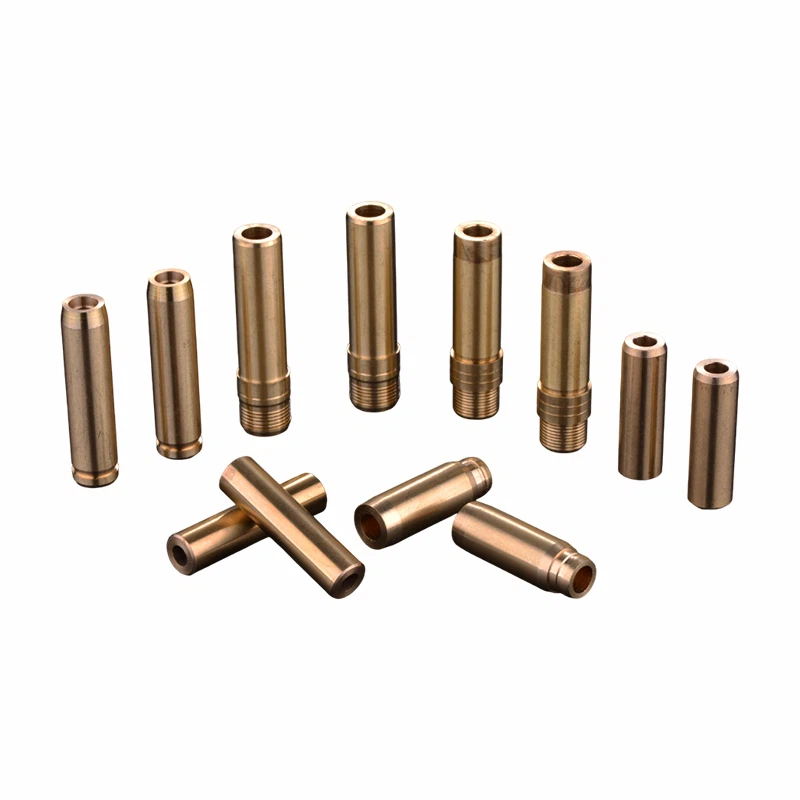

Let's start with the basics. A Cooper Bushing is a type of bearing, which is a mechanical component designed to reduce friction between moving parts. In simple terms, it helps things move smoothly. These bushings are made from copper alloys, which are known for their excellent conductivity, corrosion resistance, and durability.
So, how does a Cooper Bushing work? Well, it all comes down to the principle of sliding friction. When two surfaces rub against each other, they create friction, which can cause wear and tear over time. A Cooper Bushing acts as a buffer between these two surfaces, reducing the amount of friction and wear.
Imagine you have a rotating shaft that needs to move inside a housing. Without a bushing, the shaft would rub directly against the housing, causing friction and heat. This could lead to premature wear and failure of the components. However, when you insert a Cooper Bushing between the shaft and the housing, the bushing takes on the brunt of the friction. The copper alloy material of the bushing is designed to have a low coefficient of friction, which means it can slide smoothly against the shaft and the housing.
The Cooper Bushing also helps to distribute the load evenly across the surface of the shaft and the housing. This is important because uneven loading can cause stress concentrations, which can lead to cracking and failure. By spreading the load evenly, the bushing helps to prevent these issues and extend the lifespan of the components.
Another important function of a Cooper Bushing is to provide lubrication. Copper alloys have good self-lubricating properties, which means they can reduce friction even further without the need for additional lubricants. However, in some applications, it may be necessary to use a lubricant to enhance the performance of the bushing. The lubricant helps to reduce friction, prevent wear, and dissipate heat.
Now, let's talk about some of the different types of Cooper Bushings and how they work. One common type is the plain bushing, which is a simple cylindrical component with a smooth inner surface. Plain bushings are used in a wide range of applications, including automotive engines, industrial machinery, and electrical equipment. They are typically made from a solid copper alloy or a copper alloy with a lining material, such as PTFE or bronze.
Another type of Cooper Bushing is the flanged bushing, which has a flange on one end. The flange helps to keep the bushing in place and provides additional support. Flanged bushings are often used in applications where the bushing needs to be secured to a surface, such as a housing or a bracket.
There are also self-aligning bushings, which are designed to compensate for misalignment between the shaft and the housing. Self-aligning bushings have a spherical outer surface that allows them to pivot and adjust to the alignment of the components. This helps to reduce stress and wear on the bushing and the shaft.
In addition to these types of bushings, there are also Valve Guide Pipe and Cooper Thrust Bearing. Valve guide pipes are used in automotive engines to guide the valves and ensure proper operation. They are typically made from a copper alloy with a high strength and wear resistance. Cooper thrust bearings are used to support axial loads and prevent axial movement of the shaft. They are often used in applications such as transmissions, pumps, and compressors.
As a supplier of Cooper Bushing, I understand the importance of providing high-quality products that meet the needs of our customers. That's why we use only the best materials and manufacturing processes to ensure the reliability and performance of our bushings. We also offer a wide range of sizes and configurations to meet the specific requirements of different applications.
If you're in the market for Cooper Bushings or any other copper alloy products, I encourage you to reach out to us. We have a team of experts who can help you select the right products for your application and provide you with the support and advice you need. Whether you're a small business or a large corporation, we're committed to providing you with the best possible service and value.
In conclusion, Cooper Bushings are an essential component in many mechanical systems. They work by reducing friction, distributing load, and providing lubrication, which helps to extend the lifespan of the components and improve their performance. If you have any questions about how Cooper Bushings work or need help selecting the right products for your application, don't hesitate to contact us. We're here to help you get the job done right.
References:
- "Mechanical Engineering Design" by Joseph E. Shigley and Charles R. Mischke
- "Handbook of Bearings" by Nicholas P. Chironis
- "Copper and Copper Alloys" by John W. Dini


