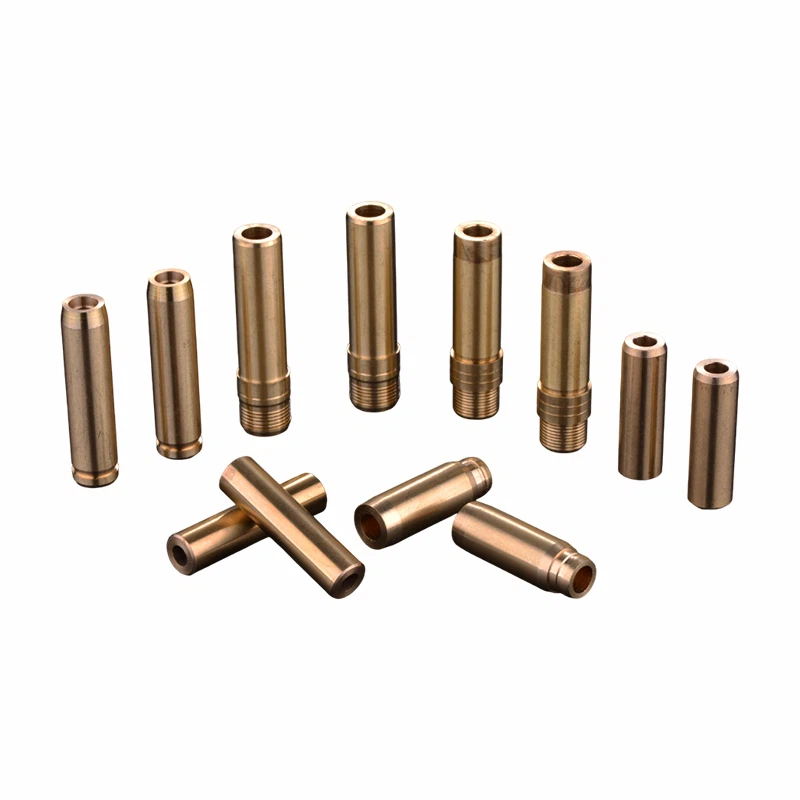
Are bronze round tubes easy to machine? This is a question that often comes up among manufacturers, engineers, and hobbyists alike. As a supplier of bronze round tubes, I've had the opportunity to work closely with these materials and understand their machining characteristics. In this blog post, I'll share my insights on the machinability of bronze round tubes, exploring the factors that influence it and offering some practical tips for successful machining.
Understanding Bronze Round Tubes
Before delving into the machinability of bronze round tubes, it's important to understand what bronze is and why it's used in various applications. Bronze is an alloy primarily composed of copper and tin, although other elements such as aluminum, manganese, nickel, or zinc may also be added to enhance specific properties. The addition of tin gives bronze its characteristic strength, hardness, and corrosion resistance, making it a popular choice for a wide range of applications, including bearings, bushings, gears, valves, and decorative items.


Bronze round tubes are cylindrical hollow structures made from bronze alloy. They are available in various sizes, wall thicknesses, and lengths to meet the specific requirements of different applications. These tubes are commonly used in industries such as automotive, aerospace, marine, and plumbing, where their excellent mechanical properties and corrosion resistance are highly valued.
Machinability of Bronze Round Tubes
The machinability of a material refers to its ease of being cut, shaped, and formed using various machining processes such as turning, milling, drilling, and grinding. When it comes to bronze round tubes, their machinability is generally considered to be good, but it can be influenced by several factors, including the composition of the bronze alloy, the hardness of the material, the machining process used, and the cutting tools employed.
Composition of the Bronze Alloy
The composition of the bronze alloy plays a significant role in determining its machinability. Different bronze alloys have different properties, and some may be more difficult to machine than others. For example, alloys with a high tin content tend to be harder and more brittle, which can make them more challenging to machine. On the other hand, alloys with a lower tin content and the addition of other elements such as lead or phosphorus can improve machinability by reducing friction and chip formation.
Hardness of the Material
The hardness of the bronze round tube also affects its machinability. Harder materials require more cutting force and can cause more wear on the cutting tools. Therefore, it's important to select the appropriate cutting tools and machining parameters based on the hardness of the material. In general, softer bronze alloys are easier to machine than harder ones.
Machining Process Used
The machining process used can also impact the machinability of bronze round tubes. Different machining processes have different requirements and characteristics, and some may be more suitable for bronze than others. For example, turning is a common machining process used for bronze round tubes, as it allows for the precise shaping of the outer diameter of the tube. Milling, on the other hand, is often used to create complex shapes and features on the surface of the tube. Drilling is used to create holes in the tube, and grinding is used to achieve a smooth surface finish.
Cutting Tools Employed
The choice of cutting tools is crucial for successful machining of bronze round tubes. The cutting tools should be made from a material that is hard enough to withstand the cutting forces and wear resistance. High-speed steel (HSS) and carbide are commonly used cutting tool materials for bronze machining. HSS tools are relatively inexpensive and can be used for general-purpose machining, while carbide tools are more expensive but offer better performance and longer tool life, especially for high-speed machining.
Tips for Machining Bronze Round Tubes
Based on my experience as a bronze round tube supplier, I've compiled some tips to help you achieve successful machining results:
Select the Right Bronze Alloy
Choose a bronze alloy that is suitable for your specific machining requirements. Consider factors such as the desired mechanical properties, corrosion resistance, and machinability. Consult with your supplier or a materials expert to determine the best alloy for your application.
Use the Appropriate Cutting Tools
Select cutting tools that are designed for machining bronze. High-speed steel (HSS) or carbide tools are recommended, depending on the machining process and the hardness of the material. Make sure the cutting tools are sharp and in good condition to ensure efficient cutting and minimize tool wear.
Optimize the Machining Parameters
Adjust the machining parameters such as cutting speed, feed rate, and depth of cut to suit the bronze alloy and the cutting tools being used. Higher cutting speeds can improve productivity, but they may also increase tool wear. Lower feed rates and depths of cut can help to reduce cutting forces and improve surface finish. Experiment with different parameters to find the optimal settings for your specific application.
Use Coolant or Lubricant
Applying a coolant or lubricant during machining can help to reduce friction, dissipate heat, and improve chip formation. This can extend the tool life and improve the surface finish of the machined part. Choose a coolant or lubricant that is compatible with bronze and the machining process being used.
Control the Chip Formation
Proper chip control is essential for successful machining of bronze round tubes. Bronze chips can be long and stringy, which can cause problems such as chip clogging and tool breakage. Use appropriate chip breakers or chip evacuation methods to ensure that the chips are removed from the cutting zone efficiently.
Inspect the Machined Parts
After machining, inspect the parts carefully to ensure that they meet the required specifications. Check for any signs of tool wear, surface defects, or dimensional inaccuracies. Make any necessary adjustments to the machining process or cutting tools to improve the quality of the machined parts.
Conclusion
In conclusion, bronze round tubes are generally considered to be easy to machine, but their machinability can be influenced by several factors. By understanding these factors and following the tips outlined in this blog post, you can achieve successful machining results and produce high-quality bronze parts. If you have any questions or need further assistance with machining bronze round tubes, please don't hesitate to contact us. We're a leading supplier of Bronze Shaped Tube, Bronze Square Rod, and Bronze Round Bar, and we're committed to providing our customers with the best products and services. Whether you're a large manufacturer or a small hobbyist, we can help you find the right bronze materials for your needs. Contact us today to start a conversation about your bronze tube requirements and explore how we can support your projects.
References
- ASM Handbook Volume 6: Welding, Brazing, and Soldering. ASM International.
- Metals Handbook Desk Edition, 3rd Edition. ASM International.
- Machining Data Handbook, 3rd Edition. Metcut Research Associates.